Weighted Vest vs Compression Vest: What's the Difference?
Weighted vest vs compression vest: input type, wear schedule, chest-measure sizing, and listing checks Amazon skips.
DeepPressureStimulation.com editorial team
Site desk, DeepPressureStimulation.com ·
📖 Table of Contents
Affiliate Disclosure: As an Amazon Associate we earn from qualifying purchases. Some links on this page are affiliate links - if you buy through them, we receive a small commission at no extra cost to you. This never influences which products we recommend. Full disclosure policy · How we make money
Weighted Vest vs Compression Vest: What’s the Difference?
Last Updated: June 30, 2026 Byline: DeepPressureStimulation.com editorial team
Parents and therapists often use the terms “weighted vest” and “compression vest” interchangeably. They shouldn’t. These are different tools that deliver different types of sensory input, and choosing the right one depends on matching the input, fit, and wearing schedule to the person’s sensory profile.
A 2011 study by Hodgetts et al. in the American Journal of Occupational Therapy examined weighted vest use during classroom activities for children with autism (Hodgetts et al., 2011). Results across sensory-vest studies are mixed, so use any vest as a structured support to trial with occupational therapy guidance, not as a guaranteed solution.
This guide is a research-and-spec compare from the DeepPressureStimulation.com editorial team: input type, fit, and wearing schedule. It is not a clinical recommendation and we did not run a vest lab.
TL;DR: Weighted vests add removable weights for proprioceptive input and are usually worn over clothing for short 15-30 minute sessions. Compression vests apply firm, even pressure and are often worn under clothing for interval-based sensory support during transitions, school focus blocks, or therapy routines. Both need a clear wearing schedule, breaks, and monitoring for distress, overheating, or restricted breathing.
Read our full compression vest guide
How Does a Weighted Vest Work?
Weighted vests provide proprioceptive input — sensory information about body position and movement. A 2015 study by Reynolds et al. in Research in Autism Spectrum Disorders found that weighted vest use was associated with improved in-seat behavior and sustained attention in children with autism during structured classroom tasks (Reynolds et al., 2015).
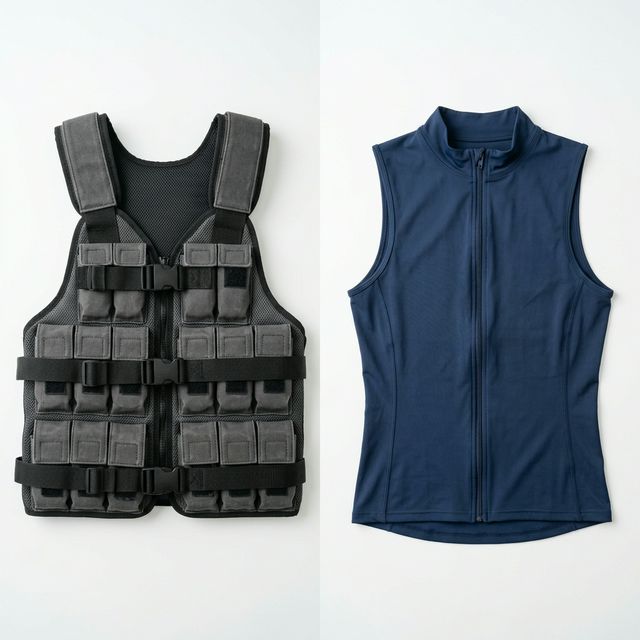
The vest itself is typically a fabric garment with pockets that hold removable weights — usually small bags of sand, steel shot, or polymer beads. The vest is worn over regular clothing, and the added weight creates a downward force on the shoulders, trunk, and core.
What proprioceptive input does
Proprioception is your body’s awareness of where it is in space. The proprioceptive system uses receptors in muscles, joints, and tendons to tell the brain about position, force, and movement. When this system isn’t working efficiently — as is common in autism, ADHD, and sensory processing disorder — the brain may seek out intense physical input to compensate.
Heavy work and weight-bearing activities are classic proprioceptive strategies. A weighted vest is essentially portable heavy work. The added load gives the proprioceptive system something to register and process, which can have an organizing effect on the nervous system.
Practical details
- Weight range: Typically 1-5 lbs for children, 5-15 lbs for adults
- Wear time: 15-30 minutes at a time, with breaks (per most OT guidelines)
- Worn over clothing — visible, but some designs look like utility or outdoor vests
- Adjustable weight — pockets allow adding or removing weights
- Not designed for all-day use — the proprioceptive effect can habituate with extended wear
Citation Capsule: Reynolds et al. (2015) found in Research in Autism Spectrum Disorders that weighted vest use improved in-seat behavior and sustained attention in children with autism during classroom activities. The vest was worn for 15-30 minute intervals with breaks between sessions, consistent with occupational therapy best practices for proprioceptive input.
How Does a Compression Vest Work?
Compression vests deliver deep touch pressure (DTP) — firm, evenly distributed pressure against the torso. Some people find snug pressure calming or organizing during transitions, desk work, or busy environments, but outcomes vary and the clinical evidence is still limited.
The compression garment is snug-fitting, made from stretchy materials like Lycra, spandex, or neoprene. It’s worn under regular clothing, directly against the skin or over a thin base layer. There are no removable weights. The pressure comes from the garment’s tight fit.
What deep touch pressure does
Sensory models suggest that firm pressure interacts with tactile and proprioceptive receptors in the skin and joints. That input may help some people feel more grounded, but large clinical trials measuring hormone or nervous-system changes specifically from compression vests are limited.
Think of it this way: proprioceptive input (weighted vest) tells the brain where the body is. Firm touch pressure (snug vest) tells the brain the body is safe. Both are calming, but through different mechanisms.
Practical details
- No added weight — compression comes from garment fit
- Wear time: Often trialed in 15-30 minute sessions with equal or longer breaks, unless an OT gives different guidance
- Worn under clothing — discreet and invisible in most settings
- Not adjustable in real-time — sizing must be correct at purchase
- Machine washable — most compression garments are easier to care for than weighted vests
Compression vests for adults with SPD
What’s the Key Difference Between These Two Vests?
The core distinction is type of sensory input. The American Journal of Occupational Therapy has published multiple studies examining both modalities, and occupational therapist Jean Ayres’ foundational work on sensory integration theory (Ayres, 1972) established that proprioceptive and tactile inputs are processed through separate neurological pathways — even though they often overlap in practice.
| Feature | Weighted Vest | Compression Vest |
|---|---|---|
| Primary input | Proprioceptive (weight/gravity) | Deep touch pressure (compression) |
| Worn | Over clothing | Under clothing |
| Visibility | Visible | Discreet |
| Weight | 1-15 lbs (removable) | No added weight |
| Wear duration | 15-30 min sessions | 15-30 min sessions, then breaks |
| Adjustability | High (add/remove weights) | Low (fixed fit) |
| Best for | Focused tasks, therapy, transitions | Interval-based support during school blocks, transitions, or social settings |
| Maintenance | Weights must be removed before washing | Machine washable |
| Cost range | $30-80 (children), $50-150 (adults) | $25-60 (children), $40-100 (adults) |
School staff threads and parent forums often prefer compression under a uniform because it stays invisible. Weighted vests show up more in home and clinic notes because the load is easier to add or remove between tasks. That is a community pattern, not a study result.
Wearing Schedule: Weighted Vest vs. Compression Vest
Because weighted and compression vests apply different sensory input, their schedules should be planned differently. Use these as conservative starting points and follow the person’s OT plan when one exists.
| Vest type | Typical starting schedule | Break pattern | Key safety check |
|---|---|---|---|
| Weighted vest | 10-15 minute trial, then 15-30 minute sessions if tolerated | Break at least as long as the wear session | Stay within OT weight guidance and remove during running, climbing, PE, or sleep |
| Compression vest | 10-15 minute trial, then 15-30 minute sessions if tolerated | Equal or longer break before reapplying | Confirm full breathing, no overheating, no panic, and no lasting red marks |
| Light compression shirt | Short trial first; may be tolerated longer by some users | Scheduled breaks still help check comfort and skin | Monitor heat, skin irritation, and whether the wearer wants it removed |
A compression vest wearing schedule should answer three questions: when the vest goes on, when it comes off, and what signs mean it should be removed immediately. For children, see the compression vest wear-time guide for school and parent-monitoring templates. For adults building a commute, workplace, or daily routine, see the adult pressure vest wearing schedule.
When Do Occupational Therapists Recommend Each?
According to the American Occupational Therapy Association, sensory-based interventions should be individualized based on the person’s sensory profile, functional goals, and environmental demands (AOTA Practice Guidelines, 2020). There’s no universal “better” option — each serves a specific purpose.
Weighted vests are typically recommended when:
- The child is a sensory seeker who craves heavy input and crashes into things
- Short-duration tasks need improved focus (homework, circle time, therapy exercises)
- Proprioceptive processing is the primary concern — poor body awareness, clumsy movements, difficulty grading force
- The environment allows visible equipment (home, OT clinic, understanding classroom)
- Gradual weight adjustment is needed as the child habituates or grows
Compression vests are typically recommended when:
- The child needs targeted regulation during specific high-stress windows of the school day
- Discretion matters — the child doesn’t want to look different from peers
- Tactile processing is the primary concern — the child craves or is soothed by firm touch
- Transitions or emotional dysregulation are the target situations, and the person responds well to snug pressure
- Transitions between environments are a major trigger (compression vests travel without interruption)
Sometimes both are used
Some OTs recommend using both tools for different parts of the day. For example, a compression garment may be used during specific school transitions or focus blocks, while a weighted vest may be reserved for homework or structured therapy sessions. This layered approach should follow a written schedule so the child gets breaks and adults can monitor response.
Which Is Better for School Settings?
In school environments, compression vests are generally preferred. A 2019 survey of special education teachers published in the Journal of Occupational Therapy, Schools, & Early Intervention found that discreet sensory tools had significantly higher compliance rates among students than visible ones. This makes intuitive sense — no child wants to be the one wearing something that looks different.
Compression vest advantages at school:
- Worn under uniform or regular clothing — no one knows it’s there
- Can be used during specific transition times, lunch, or classroom focus blocks while still allowing regular breaks
- Doesn’t require teacher intervention to put on or remove weights
- Won’t cause questions or teasing from peers
- Fits within most school dress codes
Weighted vest challenges at school:
- Visible, which may stigmatize the child
- Requires timed intervals — someone needs to watch the clock
- Weights can shift, rattle, or distract
- Must be removed and stored during breaks
- May require an IEP or 504 plan accommodation note
That said, some children genuinely respond better to the proprioceptive input of a weighted vest. If that’s the case, the social considerations become secondary to the therapeutic benefit. Work with the child’s OT and school team to determine the best approach.
Citation Capsule: Occupational therapy guidance emphasizes matching sensory interventions to individual sensory profiles. Weighted vests provide proprioceptive input during short tasks, while compression vests provide firm pressure that some people prefer during transitions or focus blocks. The American Occupational Therapy Association recommends individualized assessment before selecting either tool.
Deep pressure therapy guide for autism
Compare Vest Options
Use product listings as a starting point, then confirm sizing, return policy, and OT fit guidance before buying. Avoid any vest that restricts breathing, overheats the wearer, or cannot be removed quickly.
| Option | Best for | What to check | Link |
|---|---|---|---|
| Child compression vest | School transitions or focus blocks | chest measurement, breathability, easy removal | Compare Harkla compression vests on Amazon |
| Clinical compression garment | OT-guided support | professional sizing, return policy, wear schedule | Compare SPIO compression vests on Amazon |
| Weighted sensory vest | Short proprioceptive input sessions | removable weights, total load, break schedule | Compare sensory weighted vests on Amazon |
| Adult compression shirt | Discreet self-managed pressure | independent removal, heat, sizing chart | Compare adult compression shirts on Amazon |
How Should You Size Each Type of Vest?
Sizing errors are the most common reason sensory vests fail. An improperly sized compression vest provides insufficient pressure; an improperly weighted vest can be unsafe. The American Journal of Occupational Therapy recommends that weighted vests not exceed 5-10% of the wearer’s body weight as a starting guideline (Olson and Moulton, 2004).
Weighted vest sizing
- Weight: Start at 5% of body weight, increase gradually to 10% maximum
- Fit: Should sit snugly on the shoulders without sliding
- Length: Should cover the torso from shoulders to waist
- Straps: Adjustable side or shoulder straps ensure the weight stays centered
- Test before committing: Have the child wear it for 15 minutes in a calm setting first
Compression vest sizing
- Measurements needed: Chest circumference, waist circumference, torso length
- Fit: Should be tight enough to feel firm pressure but never restrict breathing
- Test: The child should be able to take a full deep breath while wearing it
- Material stretch: Factor in 10-15% stretch — buy the size that’s snug before the fabric stretches
- Growth: Budget for replacement every 6-12 months as children grow
Listings sell by shirt size. Compression vests do not drape like a T-shirt. Measure chest and torso, then use the brand chart. Sizing down “for more pressure” is how breathing gets restricted; if you are between sizes, keep the looser SKU until a two-finger fit check is done.
What Are the Safety Considerations?
Both tools are generally safe when used correctly, but the risks differ. A review by Lin et al. in Pediatrics (2022) noted that adverse effects from sensory-based interventions are rare but underreported, and that proper supervision and individualized fitting are essential for safety.
Weighted vest safety
- Never exceed 10% of body weight without OT guidance
- Remove during physical activity (running, climbing, PE)
- Don’t use for sleep
- Monitor for skin irritation under straps
- Supervise children under 5
Compression vest safety
- Watch for signs of restricted breathing — if the child can’t take a full breath, it’s too tight
- Remove immediately if the child shows signs of distress
- Check for pressure marks on the skin after removal — mild marks are normal, red welts are not
- Avoid in hot weather without breathable fabric
- Never use compression vests on infants or toddlers under 2. Children ages 2-4 should only use them under direct, awake adult supervision with pediatric or OT guidance.
When to consult an occupational therapist
If you’re unsure which vest type is right, or if the child has complex sensory needs, a professional assessment is the safest path forward. An OT can evaluate the child’s sensory profile, recommend the appropriate tool, and establish a wearing schedule that maximizes benefit while minimizing risks.
Citation Capsule: Clinical guidelines recommend that weighted vests not exceed 5-10% of the wearer’s body weight (Olson and Moulton, 2004, American Journal of Occupational Therapy). Compression vests should allow full breathing and leave no lasting red marks. Both tools require individualized fitting and, for children with complex needs, occupational therapy guidance.
Listing checks before you buy
The Amazon title will say “sensory vest” for both tools. Confirm the input before you confirm the cart.
- Decide input first: removable load (weighted) vs snug fabric (compression). If the photo shows weight pockets, it is not a compression vest.
- Measure chest and torso. Shirt size is not a compression size.
- Confirm the wearer can open the zip or velcro without help.
- Read total listed weight on a weighted vest, not just “includes weights.” Stay in a conservative starting band unless an OT writes a different load.
- Check return friction and whether the seller, not Amazon, handles the return.
- Pair the SKU with the parent buying guide and the wear-time guide before you set a school timer.
Frequently Asked Questions
Can my child wear both a weighted vest and a compression vest at the same time?
Technically yes, but it’s rarely recommended without OT guidance. Layering two sources of sensory input can overwhelm rather than help. If an OT recommends both, they’re typically used at different times, such as compression during specific school transitions or focus blocks and weighted input during homework or structured therapy.
What is a safe compression vest wearing schedule?
A conservative compression vest wearing schedule starts with 10-15 minute trials, then moves toward 15-30 minute sessions only if the person stays comfortable. Use equal or longer breaks, and remove the vest immediately for overheating, breathing changes, panic, skin irritation, or distress.
How long does it take to see results from a sensory vest?
Most occupational therapists suggest a two-week consistent trial period. Some children respond within the first session; others need time for their nervous system to adapt. If there’s no observable change in focus, behavior, or emotional regulation after two weeks of proper use, the vest type or weight may need adjustment.
Will insurance cover a weighted or compression vest?
Sometimes. If an occupational therapist prescribes the vest as part of a treatment plan and documents medical necessity, some insurance plans cover it under durable medical equipment. Medicaid waiver programs in many states also cover sensory tools when prescribed. Check with your plan and request a letter of medical necessity from your OT.
Can adults use weighted or compression vests?
Yes, adults can trial weighted or compression vests if they can remove the garment independently and monitor their own response. Some adults with autism, ADHD, anxiety, or sensory processing differences prefer one type of input over the other. Adult-sized compression shirts are widely available as athletic wear, and sensory-specific weighted vests are available from therapeutic equipment manufacturers.
Which vest is better for anxiety specifically?
Some people prefer compression vests for nervousness or unease because the pressure is distributed and discreet. Others respond better to weighted input or dislike snug clothing. For anxiety-related use, start with short supervised trials and do not use a vest as a replacement for clinical anxiety care.
Frequently Asked Questions
Can my child wear both a weighted vest and a compression vest at the same time?
Technically yes, but it is rarely recommended without OT guidance. Layering two sensory inputs can overwhelm rather than help. Most OTs suggest using them at different times, such as compression during specific school transitions or focus blocks and weighted input during homework or therapy.
What is a safe compression vest wearing schedule?
Start with 10-15 minute trials, then move toward 15-30 minute sessions only if the person stays comfortable. Use equal or longer breaks, and remove the vest immediately for overheating, breathing changes, panic, skin irritation, or distress.
How long does it take to see results from a sensory vest?
Most OTs suggest a two-week consistent trial. Some people respond in the first session; others need time to adapt. If there is no useful change after two weeks of proper use, the vest type, fit, weight, or schedule may need adjustment.
Will insurance cover a weighted or compression vest?
Sometimes. If prescribed by an OT as part of a treatment plan with documented medical necessity, some insurance plans cover it under durable medical equipment. Medicaid waiver programs in many states also cover sensory tools.
Can adults use weighted or compression vests?
Yes, adults can trial weighted or compression vests if they can remove the garment independently and monitor their response. Some adults prefer one type of sensory input over the other.
Which vest is better for anxiety specifically?
Some people prefer compression vests because the pressure is distributed and discreet. Others respond better to weighted input or dislike snug clothing. Use short supervised trials and do not replace clinical anxiety care.
Related Articles
- Best Sensory Tools for ADHD Focus and Concentration
- Weighted Blanket vs Comforter: What’s the Difference?
- Best Compression Sheets for Better Sleep
- Deep Pressure Therapy for Ehlers-Danlos Syndrome (EDS)
- Sensory Room Design Guide for Home
- Weighted Stuffed Animals for Anxiety: Do They Work?
- Body Sock Sensory Benefits: Complete Guide
- Proprioceptive Input Activities for Adults
- Deep Pressure Massage Techniques for Self-Regulation
- Compression Vests for Adults with Autism: A Complete Guide
- Which Weighted Blankets Last Longest Without Clumping Filler
- Best Weighted Blanket for Kids: Safety Guide
- Best OT-Recommended Sensory Products for Autism
- Deep Pressure Therapy Dogs: How They Help
DeepPressureStimulation.com editorial team
Site desk, DeepPressureStimulation.com
The DeepPressureStimulation.com editorial team writes guides to weighted blankets, compression wear, and sensory tools from peer-reviewed research, published occupational-therapy guidelines, manufacturer specifications, and community reviews. The desk is not a licensed occupational therapy practice or medical clinic, and nothing here is medical advice — always consult a qualified healthcare provider before starting a new therapy.
Stay Informed, Stay Calm
Get science-backed articles on deep pressure therapy, weighted blankets, and sensory tools delivered to your inbox. No spam — just calm.
📬 No spam, ever. Unsubscribe anytime.