Best Sensory Tools for Autistic Adults: Deep Pressure Options That Actually Help
A research-based guide to the best deep-pressure sensory tools for autistic adults — weighted blankets, compression wear, and lap pads.
DeepPressureStimulation.com editorial team
Site desk, DeepPressureStimulation.com ·
📖 Table of Contents
Affiliate Disclosure: As an Amazon Associate we earn from qualifying purchases. Some links on this page are affiliate links - if you buy through them, we receive a small commission at no extra cost to you. This never influences which products we recommend. Full disclosure policy · How we make money
As an Amazon Associate we may earn a commission from qualifying purchases made through links on this page, at no extra cost to you.
For many autistic adults, deep pressure — the firm, evenly distributed sensation of weight or gentle compression — is one of the most reliable ways to settle a nervous system that won’t quiet down. Unlike a quick fix, deep pressure is something you can build into a daily routine: a weighted blanket at night, a compression shirt during a high-stress workday, a lap pad while you read or commute. The challenge isn’t that these tools don’t exist; it’s that the same input one person finds grounding can feel smothering or uncomfortable to another, and a tool that works beautifully for sleep may be useless at your desk.
This guide walks through the main categories of deep-pressure sensory tools for autistic adults, what the research actually says, and how to choose a format that matches your own sensory profile rather than the bestseller list.
What the research actually says about deep pressure
Deep pressure is a form of proprioceptive input — sensory information coming from your muscles, joints, and connective tissue. Proprioception is one of the “hidden” senses (along with the vestibular sense of balance and movement), and differences in proprioceptive processing are a core part of how many autistic people experience the world. The STAR Institute for Sensory Processing offers a clear overview of how proprioceptive input fits into overall sensory regulation (sensoryhealth.org).
The most famous example of deliberately applied deep pressure comes from Temple Grandin, the autistic animal scientist who built a “squeeze machine” to deliver controllable full-body pressure. Grandin documented its calming effects in peer-reviewed research beginning in the early 1990s, and her work is still one of the most-cited references in this area. You can browse the broader literature yourself on PubMed (deep-pressure and autism research).
The honest caveat is that marketing copy oversells the evidence. Controlled studies on weighted blankets and similar tools have produced mixed results — some people report meaningful reductions in anxiety or improvements in sleep, while well-designed trials find effects smaller than anecdote would predict. The fair summary: deep pressure is a low-risk, supportive tool that many autistic adults genuinely find helpful for self-regulation. It is not a treatment or a cure. For self-determined perspectives on sensory and support strategies, the Autistic Self Advocacy Network — an organization run by and for autistic people — is a worthwhile resource (autisticadvocacy.org).
The main categories of deep-pressure tools
1. Weighted blankets
The default deep-pressure tool, and for good reason. A weighted blanket drapes evenly across the body, providing steady input that many people associate with falling asleep faster and staying settled. Fill material matters more than most buyers expect: glass-bead fills are quieter, less bulky, and tend to run cooler, while plastic-pellet fills are cheaper but can bunch and shift. If you sleep hot, look for breathable cotton or moisture-wicking covers, or consider a knit design (Bearaby’s layered-yarn blankets, for example, use yarn instead of fill beads, which improves airflow).
A widely cited starting point is roughly 10% of your body weight, but treat that as a loose guideline, not a rule — personal preference and comfort vary, and many adults prefer slightly less than that formula suggests. Browse options on Amazon (weighted blankets for adults), and for hot sleepers specifically, see our cooling weighted blanket guide and our broader weighted blanket for anxiety guide.
2. Compression clothing and vests
Where a weighted blanket is for rest, compression wear is for being upright and functional. A compression shirt, leggings, or vest delivers firm, continuous pressure to the torso — input that many autistic adults describe as steadying and organizing during high-stress or socially demanding situations. The advantage over weighted gear is that compression is lightweight, less hot, and easier to wear under regular clothes at work or school.
Within this category, compression vests (sometimes called pressure vests or sensory vests) are the most targeted option: adjustable straps let you dial in the exact amount of pressure and self-regulate on the fly. Some designs use inflatable air chambers so you can change intensity without taking the garment off. Amazon (compression and sensory vests) carries a range. For more detail on wear schedules and choosing between formats, see our compression vests for autism and ADHD guide and our compression clothing for anxiety guide. Everyday athletic compression shirts are a cheaper, lower-intensity entry point — Amazon (compression shirts).
3. Compression (sensory) sheets
A lesser-known but well-loved option: a stretchy lycra sheet that wraps around the mattress and zips or stretches over the top, sandwiching the body in even pressure all night. Because the pressure comes from fabric tension rather than added weight, compression sheets are dramatically lighter and cooler than weighted blankets — a real advantage for adults who want full-body pressure but can’t tolerate heavy layers or who run hot. They also stay put, so you don’t wake up fighting a blanket that has slid to the floor. See our compression sheets guide and browse Amazon (compression sheets).
4. Body socks (sensory socks)
A body sock is a stretchy lycra sack you step into, providing full-body resistance and proprioceptive feedback whenever you move, push, or stretch against the fabric. They’re especially popular for active self-regulation — pushing against the resistance can be grounding in a way that passive weight isn’t. Body socks also offer a quick, enclosed retreat: a low-stakes way to block visual input and reset when the environment is too much. Read our body socks sensory guide and browse Amazon (sensory body socks).
5. Lap pads and shoulder wraps
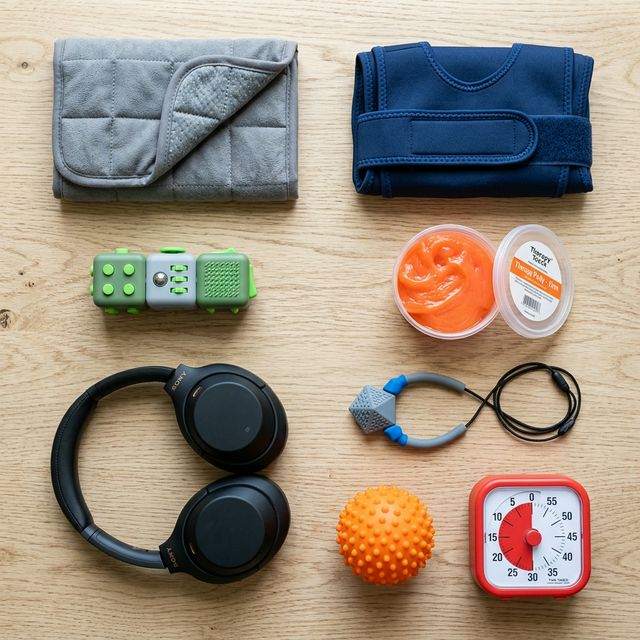
Not every moment calls for full-body input. A weighted lap pad delivers targeted pressure to the thighs while you sit at a desk, eat a meal, or ride in a car, and a weighted shoulder wrap does the same for the upper body. These are the workhorses of the deep-pressure world: discreet, portable, less expensive than a full blanket, and easy to keep in a drawer or bag. They’re ideal for adults who want a grounding tool they can deploy in public without drawing attention. Browse Amazon (weighted lap pads) and Amazon (weighted shoulder wraps).
6. Weighted plush and microwavable wearables
A softer, gentler format. Weighted stuffed animals and microwavable warmable plush (such as the widely available lavender-filled Warmies line) combine modest deep pressure with warmth and a soothing texture. The pressure is far lighter than a blanket, which suits adults who want comfort rather than intensity, or who are sensitive to the heaviness of traditional weighted gear. They’re also genuinely portable. Browse Amazon (weighted stuffed animals) and Amazon (microwavable Warmies).
How to choose the right deep-pressure tool
Start with when you need the input, then match the format:
- For sleep, your main candidates are a weighted blanket or a compression sheet. Choose the sheet if you run hot or dislike heavy weight; choose the blanket if you prefer the feeling of weight.
- For the workday or social situations, compression clothing is the most practical — it’s invisible under clothes and stays on without any effort.
- For active, in-the-moment regulation, a body sock or a weighted lap pad gives you something to push against or anchor with.
- For quick, low-intensity comfort, a weighted plush or wearable is the gentlest option.
Then factor in sensory profile. If you’re heat-sensitive, prioritize knit blankets, compression sheets, and moisture-wicking fabrics. If seams, tags, or certain textures bother you, check construction details before buying and keep the return policy in mind. If you prefer smooth, cool input, glass-bead fills and lycra beat fuzzy, plush surfaces. When in doubt, start with a lighter or less expensive option (a lap pad or athletic compression shirt) to learn what intensity and texture work for you before investing in a premium weighted blanket or adjustable vest.
Safety basics
Deep-pressure tools are low-risk for most adults, but a few principles apply. Always make sure the user can remove the item independently — this matters most for adults with higher support needs or limited mobility, where a caregiver should help evaluate fit and wear time. Avoid anything that restricts the chest or neck in a way that interferes with breathing, never cover the face, and manage heat: compression and weighted layers can trap warmth, so watch for overheating, especially in summer. For compression vests in particular, follow a wear schedule rather than using one all day — our compression vest wear-time guide covers sensible on/off patterns.
How we approached this guide
This article is research-based, not hands-on product testing. Recommendations are compiled from manufacturer specifications, occupational-therapy and sensory-processing resources, and aggregated buyer feedback — we did not test these products in a lab and do not award tested or reviewed ratings. Prices, exact weights, and availability change frequently; check the product page before buying.
Frequently asked questions
How heavy should a weighted blanket be for an adult? A common starting guideline is about 10% of body weight, but personal preference varies and many adults are comfortable slightly below that. The goal is firm, even pressure that feels calming rather than pinned — if it feels like a struggle to move under it, it’s too heavy.
Can deep pressure actually help autistic adults? Many autistic adults report that deep pressure helps them self-regulate, reduce anxiety, and settle into sleep. The peer-reviewed evidence is mixed and more modest than marketing suggests, so it’s best understood as a supportive, low-risk tool rather than a treatment or cure.
How long should I wear a compression vest or shirt? There’s no single number, but most occupational-therapy guidance favors wearing schedules — for example, 20–30 minutes on, then a break — rather than continuous all-day wear. Adjustable vests let you reduce pressure or remove the garment the moment it stops feeling helpful.
Are there any risks? For most adults the risks are minor: overheating, discomfort from the wrong texture, or pressure that’s too intense. The main safety rule is that the user should always be able to remove the item independently, and chest/neck coverage should never interfere with breathing.
Deep pressure isn’t a universal fix, but for a lot of autistic adults it’s a genuinely useful form of self-regulation you can keep within arm’s reach. The most effective approach is usually the simplest: pick one format that fits a specific moment in your day, learn what intensity and texture work for your sensory profile, and build from there.
Related: Squeeze Machine for Autism and Sensory Processing: A Complete Guide.
DeepPressureStimulation.com editorial team
Site desk, DeepPressureStimulation.com
The DeepPressureStimulation.com editorial team writes guides to weighted blankets, compression wear, and sensory tools from peer-reviewed research, published occupational-therapy guidelines, manufacturer specifications, and community reviews. The desk is not a licensed occupational therapy practice or medical clinic, and nothing here is medical advice — always consult a qualified healthcare provider before starting a new therapy.
Stay Informed, Stay Calm
Get science-backed articles on deep pressure therapy, weighted blankets, and sensory tools delivered to your inbox. No spam — just calm.
📬 No spam, ever. Unsubscribe anytime.