Glass Beads vs Plastic Pellets in Weighted Blankets: Which Fill to Buy
Glass beads vs plastic pellets: named fill vs mystery beads, noise, loft, and when to skip a cooling-glass title.
DeepPressureStimulation.com editorial team
Site desk, DeepPressureStimulation.com ·
📖 Table of Contents
Affiliate Disclosure: As an Amazon Associate we earn from qualifying purchases. Some links on this page are affiliate links - if you buy through them, we receive a small commission at no extra cost to you. This never influences which products we recommend. Full disclosure policy · How we make money
Updated September 12, 2026 | Byline: DeepPressureStimulation.com editorial team
Amazon will sell you a 15 lb blanket and skip the part that changes how that 15 lb feels. The fill is the hardware. Glass microbeads and plastic poly pellets can hit the same number on the tag and still differ in thickness, noise, heat, wash risk, and what happens when a seam pops. A “cooling glass” title on a pellet minky SKU is a heat sandwich, not a fill spec.
This page is a buying and spec guide from the DeepPressureStimulation.com editorial team. We compared manufacturer filler pages, laundry notes, and the language listings actually use. We did not sieve a box of beads. For how fill migrates after months of use, see which weighted blankets last longest without clumping. For pound selection, use the weight guide.
TL;DR: Glass microbeads are small and dense, so a 15 lb quilt is usually thinner and quieter. Plastic poly pellets are larger and lighter per volume, so the same pounds look puffier and rustle more. Gravity calls glass the current standard and pellets the budget runner-up (Gravity fillers). Read the fill line on the variation, not the lifestyle photo.
What each fill actually is
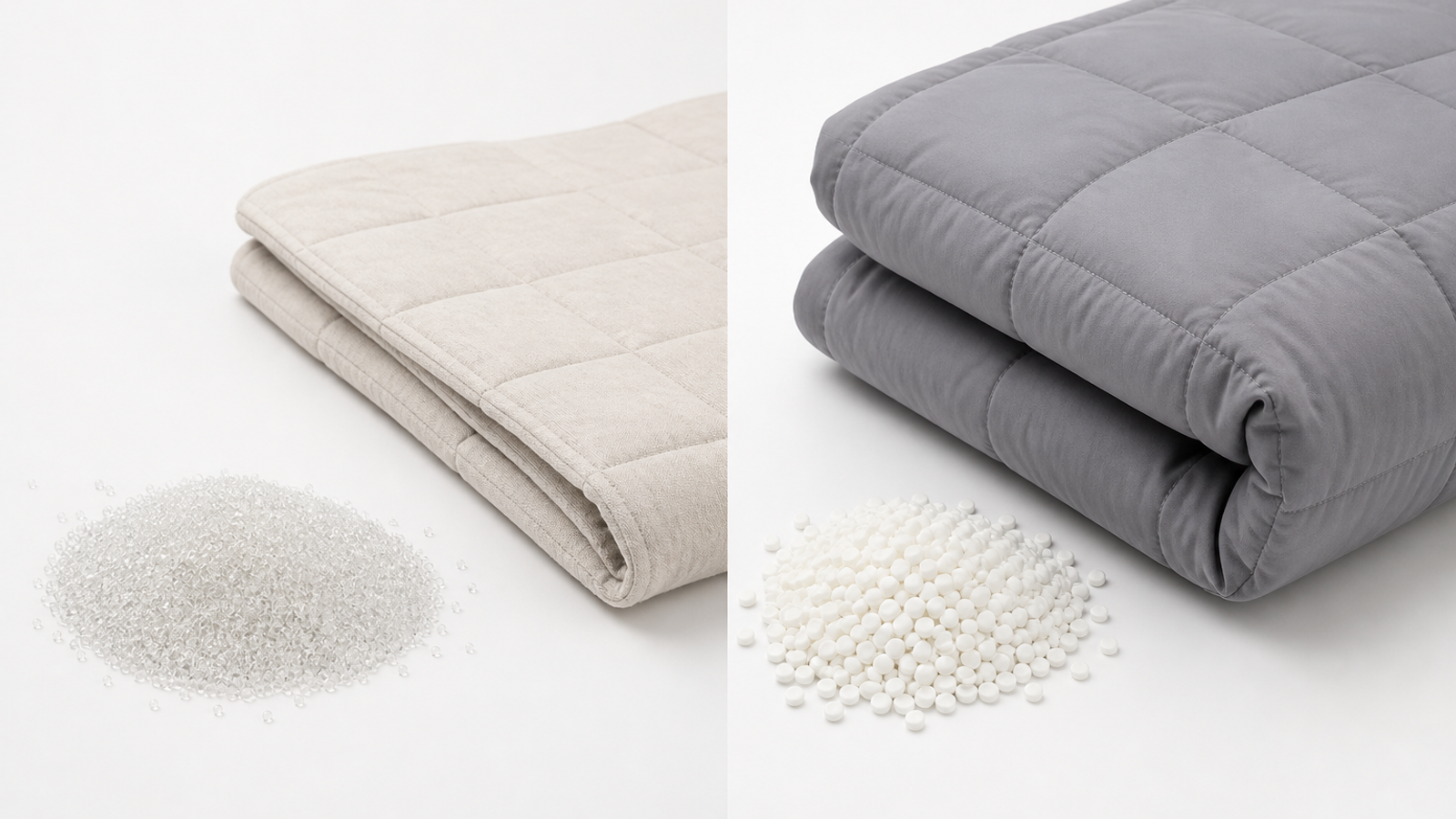
Glass microbeads are tiny spheres, often described as looking like fine sand. Gravity’s filler guide says they are one of the heavier options, so you need less volume to reach the listed pounds, and they stay quiet when the blanket moves (Gravity). Brands such as YnM, Luna, Baloo, and Gravity publish glass-bead or “fine-grade glass beads” copy on their current adult quilts.
Plastic poly pellets are polypropylene or polyethylene beads. They are larger than glass microbeads and lighter for the same volume. Roly Poly, a pellet supplier, states that glass beads are about twice as dense as poly pellets, so a 15 lb pellet blanket looks bulkier than a 15 lb glass blanket (Roly Poly FAQ). Older mass-market quilts and a lot of DIY kits still use pellets because they are cheap and easy to source.
Both fills are just mass sewn into a grid. The grid, the cover fabric, and whether you can wash the insert matter as much as the bead chemistry.
A third construction skips loose fill. Knit blankets such as the Bearaby Cotton Napper get weight from yarn. That is a different SKU family. If you are choosing between a knit and a bead quilt, the Bearaby vs Gravity page is the construction comparison. This page stays on glass vs plastic inside a quilted shell.
Side-by-side hardware
| Spec | Glass microbeads | Plastic poly pellets |
|---|---|---|
| Typical particle | ~1–2 mm, smooth sphere | Larger, often lentil or irregular |
| Density | Higher; less volume per pound | Lower; more volume per pound |
| Profile at 15 lb | Thinner, drapes closer | Thicker, puffier |
| Noise when you turn | Soft, sandy whisper | Louder rustle |
| Heat | Less trapped air in the fill layer | More bulk, more trapped air |
| Common price band | Mid to premium Amazon quilts | Budget and DIY kits |
| Dryer risk | Fabric and seams, not melted glass | High heat can soften or flatten pellets |
| Spill if a seam fails | Fine beads, hard to vacuum fully | Larger pellets, easier to pick up |
| Listing words | ”glass beads,” “micro glass,” “glass microbeads" | "poly pellets,” “plastic pellets,” “PP beads” |
Density and noise notes come from Gravity’s filler article and Roly Poly’s published FAQ. Particle size ranges are the figures those pages and most brand glossaries use. We did not run a lab sieve on a box of fill. If a listing refuses to name the fill, treat it as a pellet quilt until the Q&A says otherwise.
Same pounds, different thickness
A 15 lb glass quilt and a 15 lb pellet quilt are the same weight. They are not the same object. Because glass packs more mass into less space, the glass version is usually a flatter rectangle. The pellet version needs more beads to get to 15 lb, so the pockets sit higher and the folded blanket looks like a comforter.
That changes drape. A thinner glass quilt follows shoulders and hips. A thicker pellet quilt can bridge across the body the way a cheap comforter does, with less contact in the middle. Shoppers who want a flat, close layer and shoppers who want a puffy heavy duvet are not asking for the same SKU.
It also changes storage. A 15 lb glass twin (often 48×72 on YnM-style listings) folds smaller. A pellet twin at the same pounds fights a closet shelf. Cover fit is its own problem: extra loft makes a pellet insert wad or strain a zip unless the shell inches match.
Do not “size up” a pellet blanket to chase a thinner feel. You will add more volume. If you want thin and quiet, you want glass or a knit, not a bigger pellet king.
Noise is a listing check, not a personality test
Gravity’s filler guide recommends glass when the buyer is sensitive to sound, and it describes glass as “extremely quiet” compared with pellets (Gravity). That matches what you hear in product Q&A: pellet quilts “sound like rice” or “rain on a jacket” when someone rolls over.
If you share a bed, the noisier fill is a partner problem as much as a personal one. A rustling 20 lb pellet king on a quiet night is a different product than a 15 lb glass twin that only whispers.
Some people like the rustle. That is fine. Buy pellets on purpose if you want that texture and sound. Do not buy them by accident because the title said “cooling glass feel” and the spec said polypropylene.
Open the “from the brand” bullets. “Premium glass beads” and “non-toxic plastic pellets” are both real. “Weighted beads” with no material is a dodge.
Heat: fill is one layer, fabric is another
Pellets take more space, so they trap more air in the fill layer. Gravity calls pellets “notorious for trapping heat” and tells hot sleepers to stick with micro glass or steel shot (Gravity). Glass still sits under cotton, minky, or bamboo. A glass quilt in a fleece duvet cover will sleep warm. A pellet quilt in a percale cover can be less miserable than the fill-only story suggests.
If you already overheat, do not stop at the bead line. Check cover fabric, whether the cover unzips, and whether the listing is a minky one-piece. The cooling weighted blanket guide is the fabric half of that decision. This page only tells you that pellet bulk is a heat risk on top of a plush shell.
Steel shot shows up on a few premium SKUs. It is denser than glass and even thinner at the same pounds. It is also less common on Amazon and easier to mistake for glass in a rushed title. If the spec says “steel shot” or “metal beads,” that is not a pellet quilt and it is not a glass quilt.
Clumping and durability belong on the sibling page
Pellets have more surface friction. Glass spheres slide. That is why the clumping and durability guide ranks glass ahead of poly pellets for staying even after washes. This article will not redo that ranking in full.
The buying takeaway is shorter. If you want the fill to stay put with less pocket migration, prefer glass in a tight quilt grid (many brands advertise 4×4 inch or smaller pockets) or skip fill and buy a knit. If you buy pellets, look for small pockets and a removable cover so you are not washing the insert every week.
Pocket size beats marketing adjectives. “Even distribution” with 8-inch channels is a clump factory, glass or plastic.
Wash and dryer: glass does not melt, pellets can sag
Glass beads do not absorb much water. The fabric around them does. A soaked 15 lb glass quilt is still a washer-balance problem. Tide still sends heavier blankets to a laundromat. Gravity still tells owners to keep its insert out of a home machine and wash the cover instead (Gravity care, Tide).
Pellets add a heat problem. High dryer settings can soften plastic. If the care tag is vague, air-dry a pellet quilt flat. Do not assume “machine washable” includes a hot tumble. That phrase often means the duvet cover only.
YnM’s published care for its glass-bead quilts is cold gentle wash, mild detergent, no bleach or softener, low tumble or line dry. That is a usable default for many Amazon glass quilts, including the YnM weighted blanket, and it is still not a license to ignore a different tag.
If laundry is the reason you are choosing fill, a zip cover plus a glass insert, or a knit with no loose fill, beats a cheap one-piece pellet quilt. How to wash a weighted blanket walks through brand-by-brand rules. This page is the fill filter before you click.
Cover fit changes with fill loft
A duvet cover is sold by the same twin / queen / king words as the insert. Those words do not fix loft. A 48×72 glass insert is a flatter slab. A 48×72 pellet insert is a thicker pillow of pockets. The same labeled cover can be tight on pellets and baggy on glass.
YnM sells covers on the same inch grid as its inserts: 48×72, 60×80, and 80×87 (YnM twin cover). Match those inches, then check ties. A regular sheet-set “queen duvet cover” is often near 90×90. A 60×80 glass insert swims in that shell and piles at one end. A 60×80 pellet insert may zip, then shove fill into the corners until the zipper teeth skip.
Interior loops and ties matter more on a pellet quilt because the insert wants to migrate inside leftover fabric. Look for corner ties plus mid-side ties. Gravity-style two-piece sets are built as a pair: the cover is cut for that insert. Mixing a Gravity cover with a random Amazon pellet inner is a fit gamble.
Fabric on the cover is a heat and price decision, not a fill upgrade. Bamboo or percale over glass is the cooler stack. Minky over pellets is the warm, loud stack. A cover swap does not turn pellets into glass. Compare weighted blanket duvet covers by the inch row and the attachment count, not by “universal.”
If the listing is a one-piece minky quilt with pellets sewn in, there is no cover fit to get right. You are washing the whole weight. That is usually the cheap SKU. Budget is the reason it exists.
When a seam fails
Glass microbeads behave like sand. They go into carpet, baseboards, and the washer pump. Cleanup is slow. Pellet spills are annoying and visible, but you can pick them up.
That is not a reason to buy a weak pellet quilt. It is a reason to check stitch photos and return policy. Double-stitched grids and 4-inch pockets fail less often than a loosely sewn channel bag. If the listing has reviews that mention “beads everywhere,” believe them.
For kids’ rooms and pet beds, a cover with a real zipper and interior ties keeps a leak from becoming a floor job on day one. Child weight and removal rules stay on the kids safety guide. Fill choice does not change those rules.
Price, listings, and the words brands hide
Glass costs more per pound of fill. That shows up as a higher Amazon price for a similar cotton shell, or as a two-piece Gravity-style set instead of a $40 one-piece. Pellets keep the entry price down. Gravity’s own filler article says to pick glass if budget is open and pellets if you want the affordable option (Gravity).
Titles lie in both directions. “Luxury cooling blanket” on a pellet minky SKU is a heat sandwich. “Glass bead weighted blanket” on a parent listing can still include a pellet colorway. Click the variation. Read “filling” or “material.” If the Q&A says “plastic pearls” and the bullets say “micro glass,” the Q&A is usually the honest one.
Search paths that stay on this site’s Amazon tag only:
- YnM glass-bead quilt (verified ASIN, several sizes on one parent)
- Glass bead weighted blankets
- Plastic pellet weighted blankets
- Gravity weighted blankets
- Bearaby Cotton Napper listings if you want no loose fill
Prices move. We are not the merchant. This page does not attach a live price or stock count.
Which fill to buy
Pick glass microbeads if you want a flatter drape, less rustle, and a better shot at sleeping cool under a breathable cover. Most current mid-range cotton quilts on Amazon are in this camp. Confirm the fill line anyway.
Pick plastic poly pellets if you want a lower price, a thicker “comforter” look, or you are building a DIY lap pad where pellet bags are sold by the pound. Plan on more bulk, more sound, and a gentler dryer.
Pick a knit if you want zero loose fill, easier one-piece washing (machine capacity still matters), and you accept that size is locked to weight on a Napper. That is not a bead comparison. It is the exit ramp.
Skip mystery fill. Organic rice, millet, and sand show up in handmade listings. Tide says not to submerge those. They are a different product and a worse nightly quilt.
If two people share a bed and disagree on heat or noise, two different fills on two twin quilts is cleaner than one compromise king. The couples queen and king guide covers shared weight math. This page only says the noisier, puffier fill will be the one someone complains about at 2 a.m.
When to skip a fill
Skip mystery fill. If the variation will not say glass, micro glass, poly pellets, or plastic pellets, treat it as a cheap pellet quilt or walk away. “Weighted beads” is a dodge.
Skip a “cooling glass” title on a minky or fleece one-piece. Glass under plush still sleeps warm. The cooling construction page is the fabric half.
Skip organic rice, millet, sand, and “handmade natural fill” for nightly use. Tide says not to submerge those. They are a different product and a worse wash.
Skip pellets if you share a quiet bed and the Q&A already says “sounds like rice.” That rustle is the product.
Skip a cover swap as a fill upgrade. Percale over pellets does not turn pellets into glass. Buy the fill you want, then match YnM or Gravity inches and ties — or skip loose fill with a Bearaby Cotton Napper.
Listing checks before you buy
Amazon titles staple “15 lb” to a stock photo. That is not a fill spec.
- Find the fill on the exact variation. “Glass beads,” “micro glass,” “poly pellets,” or “plastic pellets” should be in the bullets or spec table. “Weighted filling” is not enough.
- Match thickness to the fill story. A 15 lb quilt that looks as lofty as a down comforter in every review photo is probably pellets, even if the title borrowed “glass.”
- Read care for cover vs insert. A pellet insert plus a hot dryer is how pockets go lumpy. A glass insert plus an overloaded home washer is how seams go.
- Check pocket size. Prefer a stated 4×4 inch grid or smaller. Channel construction migrates either fill.
- If you sleep hot, pair glass (or a knit) with a cotton, bamboo, or TENCEL cover. Then read the cooling guide.
- If you want fill that stays in its pockets longer, use the clumping guide after you pick a fill.
- Match any duvet cover to the insert inches and loft. A pellet insert needs a closer shell and real interior ties. A glass insert in an oversized cover will wad.
- For kids, confirm both a low pound number and a fill you are willing to clean up. Then read the kids safety guide.
- When you already know the fill and want a product path, start at the weighted blankets hub or the 2026 anxiety roundup.
A short buy order:
- Pick pounds from body weight on the weight guide or the calculator.
- Pick glass, pellets, or knit from the table above.
- Open the variation and confirm fill, inches, cover ties, and wash.
- Keep a return window. Fill feel is personal.
The editorial desk compares specs and listings. It does not sell the blanket or inspect your washer.
Sources
- Gravity Blankets: A Helpful Guide to Weighted Blanket Fillers
- Gravity Blanket product care notes
- Roly Poly: poly pellets FAQ (density vs glass)
- Tide: How to Wash a Weighted Blanket
- YnM Original Cotton Weighted Blanket
Frequently Asked Questions
Are glass beads better than plastic pellets in a weighted blanket?
Better depends on what you are buying for. Glass is denser, so the same pounds usually make a thinner, quieter quilt. Gravity treats glass as the current standard and pellets as the cheaper, bulkier option. Pellets still make sense on a tight budget if you accept rustle and extra loft.
Do glass bead weighted blankets sleep cooler?
The fill layer often does. Glass needs less volume, so there is less trapped air than in a puffy pellet quilt. Gravity warns that pellets trap heat. A minky or fleece cover can wipe out that advantage. Pair glass with a breathable shell if heat is the reason you are shopping.
Are plastic pellet weighted blankets louder?
Usually. Larger pellets shift with a rustle. Glass microbeads sound closer to sand. Gravity calls glass extremely quiet and points sound-sensitive buyers at it. If the listing Q&A mentions rice or rain sounds, you are looking at pellets or a loose pocket grid.
Can I put a plastic pellet weighted blanket in the dryer?
Only if the care tag allows low heat. High heat can soften poly pellets. If the tag is vague, air-dry flat. Tide and brand pages already send heavy quilts to a laundromat for weight. Pellets add a melt risk on top of that capacity problem.
What if the Amazon listing does not say glass or plastic?
Ask in Q&A or pick a brand that prints the fill. Mystery 'weighted beads' on a $35 quilt are usually pellets. A parent listing can mix fills across colors. Confirm the variation you click, then keep the return window open.
Is a knitted weighted blanket a third option?
Yes. Knits like the Bearaby Cotton Napper have no loose beads, so there is nothing to spill or clump. Size is tied to yarn weight. Compare that construction on the Bearaby vs Gravity page if you are leaving quilted fills behind.
Will a regular duvet cover fit a glass or pellet weighted blanket?
Only if the cover inches match the insert and you have interior ties. A sheet-set queen cover is often much larger than a 60×80 weighted insert. Glass then wads at one end. Pellet loft can also strain a tight zipper. Buy a cover sold for the same 48×72, 60×80, or 80×87 grid.
Compare current glass-bead and pellet listings
Start with a quilt that names the fill on the variation you click. Glass is the thinner, quieter default; pellets are the budget bulk option. We may earn a commission at no extra cost to you.
Compare weighted blanket fillsAffiliate link — we may earn a commission at no extra cost to you.
DeepPressureStimulation.com editorial team
Site desk, DeepPressureStimulation.com
The DeepPressureStimulation.com editorial team writes guides to weighted blankets, compression wear, and sensory tools from peer-reviewed research, published occupational-therapy guidelines, manufacturer specifications, and community reviews. The desk is not a licensed occupational therapy practice or medical clinic, and nothing here is medical advice — always consult a qualified healthcare provider before starting a new therapy.
Stay Informed, Stay Calm
Get science-backed articles on deep pressure therapy, weighted blankets, and sensory tools delivered to your inbox. No spam — just calm.
📬 No spam, ever. Unsubscribe anytime.