How to Choose Compression Clothing for Anxiety: Specific Benefits
Desk notes on compression shirts and vests for anxiety: fit, fabric, wear-time, and listing checks Amazon skips.
DeepPressureStimulation.com editorial team
Site desk, DeepPressureStimulation.com ·
📖 Table of Contents
Affiliate Disclosure: As an Amazon Associate we earn from qualifying purchases. Some links on this page are affiliate links - if you buy through them, we receive a small commission at no extra cost to you. This never influences which products we recommend. Full disclosure policy · How we make money
Updated September 12, 2026 | Byline: DeepPressureStimulation.com editorial team
To choose compression clothing for anxiety, pick a garment that hits the body area that actually feels restless, stay in a mild-to-moderate snug range you can still breathe in, and buy tagless, breathable fabric you can take off in one motion. That is a shopping rule, not a clinic protocol.
This is a research-desk how-to. We compare size charts, care tags, and published sensory-intervention reviews. We are not a licensed occupational therapy practice, and we did not run a clothing trial. Compression wear is not a treatment for anxiety disorders, panic disorder, autism, or ADHD. If anxiety is new, worsening, or tied to chest pain or breathing trouble, talk to a clinician first.
If you already know you want a named sensory vest, use the adult compression vest guide. If you want the autism-tool map, start on the anxiety hub or the autism hub.
What compression clothing is, and what it is not
Compression clothing for anxiety is snug fabric that applies steady pressure across a body area. Some people find that pressure grounding during stress or sensory overload. The garments are usually nylon-spandex or polyester-spandex blends. They are not weighted. They are not medical devices unless a specific SKU is sold as medical-grade hosiery.
Athletic compression shirts, sensory vests, and medical stockings get dumped into the same Amazon carousel. Those are different products:
| Type | What the listing usually means | Useful for anxiety shopping? |
|---|---|---|
| Sensory / autism vest | Adjustable velcro or zip torso squeeze | Yes, if you want on/off control |
| Athletic compression shirt | Pullover base layer for sport | Yes, as a cheap discreet trial |
| Medical compression sock / hose | Graduated mmHg for circulation | Only if a clinician asked for circulation support |
| Shapewear | Cosmetic squeeze, often tight at the waist | Usually a poor sensory buy |
The weighted vest vs compression vest page is the fork when the listing also shows added pounds. Nighttime pressure is a weighted blanket job, not a sleep-in-tights plan.
How the pressure is supposed to help
Deep pressure stimulation is firm, distributed input to skin and muscles. Sensory write-ups treat it as proprioceptive input (body-boundary information) that some nervous systems read as organizing. Direct trials of compression garments for anxiety are thin. A 2023 study of compression in autistic children found no clear gain in task participation or repetitive behavior (Frontiers in Psychology). Older deep-pressure work, including Grandin’s squeeze-machine papers, is about autism and sensory seeking, not a guarantee that a shirt will cut a panic attack.
Treat a garment as a short trial you can stop, not as a drug-free cure. If you want the broader garment map, see compression clothing for sensory processing.
Pick the style from the body area, not the Amazon title
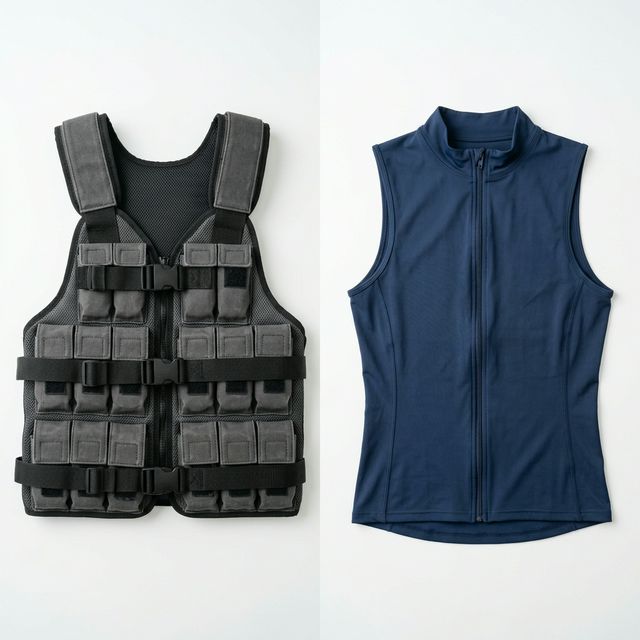
- Vest: Chest and ribs. Useful when transitions, crowds, or desk restlessness show up as torso tension. Adjustable straps beat a pullover if you might need it off fast. Compare Harkla and Compresso-T before a no-name “anxiety vest.”
- Shirt: Full upper body, looks like an undershirt. Best first buy for work or commuting. The athletic compression shirt path is the budget trial.
- Leggings: Legs only. Makes sense if the restlessness is in the thighs or calves, not the chest.
- Sleeves: One limb. A low-commitment test when you do not want a torso layer.
Do not buy a full kit on day one. One piece, one setting, one short block.
The mmHg trap
Medical stockings print compression in millimeters of mercury (mmHg). That scale exists for circulation products: roughly 15–20 mmHg is a common over-the-counter sock range, and 20–30 mmHg is often treated as medical-grade. Sensory vests and athletic shirts usually do not publish mmHg. Listing copy that says “15–20 mmHg anxiety hug” is borrowing sock language. We cannot honestly say that range is the therapeutic dose for anxiety.
Desk rule:
- If the SKU is a sock or hose and lists mmHg, treat it as a circulation product. Ask a clinician if you have clotting, neuropathy, or swelling issues.
- If the SKU is a sensory vest or athletic shirt and lists no mmHg, judge fit with a tape measure and a two-finger check, not a mercury number.
- If a shirt leaves numbness, tingling, or you cannot take a full breath, it is too tight. Size up or stop.
Older versions of this page called 15–20 mmHg the “ideal range for anxiety relief.” That overstated what the listings and the research support. Fit and the ability to get the garment off matter more than a number the brand never measured.
Fit, fabric, and the two-finger check
Measure. For shirts and vests, measure the widest part of the chest and the waist. For leggings, measure waist and hips. Use the brand chart, not your t-shirt size. If you are between sizes, size up when you are new to pressure or heat-sensitive. Sizing down “for more hug” is how breathing gets restricted.
Then do the same two-finger check we use on kids vests: you should be able to slide two fingers under the fabric at the sternum. If you cannot, loosen or size up.
Fabric details that decide whether you will wear it:
- Tagless or printed labels. A cardboard tag at the neck will end the trial on day one for a lot of sensory shoppers.
- Flatlock seams. Raised side seams rub under a work shirt.
- Breathable blends. Nylon-spandex or polyester-spandex. Thick neoprene traps heat, and heat can raise anxiety on its own.
- Closure you control. Side zip or velcro if you want it off in a meeting. Pullover only if you already know you tolerate that squeeze.
Wash care belongs in the cart decision. Cold wash, no fabric softener, air dry. Elastic dies in a hot dryer. Plan to replace a daily-wear shirt when it bags out, often inside a year if you wash it every week.
Wear time without inventing a protocol
Your nervous system adapts to steady input. All-day wear is not automatically better. Many OT write-ups use timed on/off blocks for firm vests. A practical desk start:
- First trial at home, 20–30 minutes, during something ordinary (email, a show), not during a panic.
- If that feels neutral or helpful, use it for one known stress block: a commute, a meeting, or a grocery run.
- Take it off for at least as long as you wore it before the next block.
- Do not sleep in tight compression clothing. Overnight pressure is a sleep hub problem. Use a blanket or a sheet-style product if nighttime squeeze is the goal; see compression sheets.
The kids wear-time guide is written for children. Adults can steal the on/off idea without copying a child’s school schedule.
When to skip compression clothing for anxiety
Skip the cart if torso pressure already makes you panic, if you overheat in an undershirt, or if you cannot get a pullover off without help. Try a shirt you already own, sized snug for one desk block, before you buy a named sensory SKU.
Skip medical-grade hose sold as “anxiety compression” unless a clinician asked for circulation support. That is a different risk profile.
Skip overnight wear, exercise-plus-neoprene stacks, and stacking a tight vest on top of a weighted lap pad during the same hour. You will not know which input helped.
If a heavy blanket already backfires, read when weighted blankets make anxiety worse before you add another full-body squeeze.
Listing checks before you buy compression clothing
These checks come from size charts and care pages, not a wear trial we ran.
- Match a current chest or hip measurement to the brand chart. “M/L anxiety shirt” is not a size.
- Confirm the product type. Elastic vest, athletic shirt, and mmHg sock are not interchangeable. Open the adult vest page if the photos show velcro tabs.
- Read how you get it off. If the listing hides the closure, assume a pullover.
- Check fabric content and dryer rules. If it cannot survive weekly wash, you will not wear it to work.
- Note the return window before you cut tags. Worn compression is often unsellable. Keep the bag through three short trials.
- Ignore “calms the nervous system in minutes” copy. Pair any buy with a stop rule: off immediately for numbness, chest tightness, or rising panic.
A first-week plan
- Name the setting (desk, commute, store), not the diagnosis.
- Measure once. Write the numbers down.
- Buy one moderate-snug shirt or vest with a clear return window.
- Wear it at home for 20–30 minutes. If you want it off at minute five, that is data.
- If it stays tolerable, use it for one real-world block and log heat, breath, and whether you could work.
- Only then decide whether to keep it, size up, or switch to a lap pad or a blanket.
Frequently Asked Questions
Can you wear compression clothing all day for anxiety?
You can, but that is not the default plan. Steady pressure fades into the background, and skin needs a break. Start with timed blocks and take the garment off if heat, marks, or restlessness climb.
Does compression clothing work for panic attacks?
It can feel grounding for some people if it is already on, or if you put it on at the first wave and you already know you tolerate the squeeze. During a severe panic, tight fabric can feel like a trap. Do not use a new garment for the first time in the middle of an attack. This is not a substitute for panic-disorder care.
Can you sleep in compression clothing for anxiety?
Skip tight daytime compression in bed. It can restrict breathing and circulation when you are lying down. Use a tool meant for sleep (a properly sized weighted blanket or a sheet-style wrap you can exit) and check the sleep hub.
What is the difference between athletic compression and sensory compression?
Athletic shirts chase muscle support and sweat-wicking. Sensory vests chase even torso pressure and easy on/off. An athletic shirt is a fine first trial if the seams and tags don’t itch. A named sensory vest is the better buy when you need adjustable pressure at school or work.
How do I know if my compression clothing is too tight?
It is too tight if it hurts, causes numbness, makes a full breath hard, or leaves deep marks that last. It should feel like a firm hug you can still talk and reach in. If it raises panic, size up or stop.
Frequently Asked Questions
Can you wear compression clothing all day for anxiety?
You can, but it is not the default plan. Steady pressure fades, and skin needs a break. Start with timed blocks and take the garment off if heat, marks, or restlessness climb.
Does compression clothing work for panic attacks?
It can feel grounding for some people if they already tolerate the squeeze. During a severe panic, tight fabric can feel like a trap. Do not debut a new garment in the middle of an attack, and do not treat it as panic-disorder care.
Can you sleep in compression clothing for anxiety?
Skip tight daytime compression in bed. Use a sleep-specific tool you can exit, such as a sized weighted blanket or a sheet-style wrap, and check the sleep hub.
What is the difference between athletic compression and sensory compression?
Athletic shirts chase muscle support and sweat-wicking. Sensory vests chase even torso pressure and easy on/off. An athletic shirt is a cheap first trial; a named vest is better when you need adjustable pressure.
How do I know if my compression clothing is too tight?
Too tight means pain, numbness, hard breathing, or deep marks that last. It should feel like a firm hug you can still talk and reach in. If it raises panic, size up or stop.
Sources
- Frontiers: compression garments and task participation in autistic children
- AOTA evidence-based practice resources
- PubMed: Watling and Hauer sensory-based intervention review
Related Guides
DeepPressureStimulation.com editorial team
Site desk, DeepPressureStimulation.com
The DeepPressureStimulation.com editorial team writes guides to weighted blankets, compression wear, and sensory tools from peer-reviewed research, published occupational-therapy guidelines, manufacturer specifications, and community reviews. The desk is not a licensed occupational therapy practice or medical clinic, and nothing here is medical advice — always consult a qualified healthcare provider before starting a new therapy.
Stay Informed, Stay Calm
Get science-backed articles on deep pressure therapy, weighted blankets, and sensory tools delivered to your inbox. No spam — just calm.
📬 No spam, ever. Unsubscribe anytime.