Compression Clothing Autism: Shirts, Vests, Schedules
Compression clothing for autism and SPD: shirts, vests, skip flags, and listing checks Amazon titles skip.
DeepPressureStimulation.com editorial team
Site desk, DeepPressureStimulation.com ·
📖 Table of Contents
Affiliate Disclosure: As an Amazon Associate we earn from qualifying purchases. Some links on this page are affiliate links - if you buy through them, we receive a small commission at no extra cost to you. This never influences which products we recommend. Full disclosure policy · How we make money
Compression Clothing Autism Guide: Sensory Shirts, Vests, and Schedules
Updated October 19, 2026 | Byline: DeepPressureStimulation.com editorial team
Printed mmHg is not an SPD dose. That is the unique angle on this page. Medical stockings print millimeters of mercury because they are circulation products. Sensory shirts and kids vests usually do not. A listing that says “20 mmHg autism hug” is borrowing sock language. Fit you can remove, heat you can live with, and consent beat a mercury number the brand never measured.
This is a research-desk note from the DeepPressureStimulation.com editorial team. We compare size charts, closure types, and Amazon “compression clothing autism” titles. We did not run a clinic wear trial. Compression garments are support tools to trial carefully, not treatment for autism, ADHD, anxiety, insomnia, or sensory processing disorder.
Daytime anxiety without the SPD frame is compression clothing for anxiety. Office-only layers are compression at work. Autistic-adult desk tools beyond clothing are sensory tools at work. Weight instead of squeeze is vests and lap pads. ADHD product types are on the DPS ADHD guide. The adult vest fork — wear schedules, sizing, contraindications — is compression vests for adults. Start at the autism hub or the sensory-tools hub if you are still matching input to setting.
Affiliate disclosure: This article contains affiliate links. If you purchase through our links, we may earn a commission at no extra cost to you. How this site is paid: How We Make Money.
Medical disclaimer: Informational only. Not occupational-therapy or medical advice. Ask a clinician before compression if there is asthma, circulation trouble, seizure risk, fragile skin, significant mobility limits, or if the wearer cannot remove the garment or signal stop. No infants. No unsupervised young children.
How compression clothing shows up in SPD shopping
Sensory processing differences mean the nervous system organizes input in a way that can feel like too much, too little, or both depending on the day. Some people seek firm pressure. Others avoid unexpected light touch. Compression can fit either profile. It is not automatically helpful.
For seekers, a steady squeeze can be one less thing to chase every few minutes. For avoiders, even, predictable pressure is sometimes more tolerable than a tag or a brush. Sometimes it is worse. Start with consent, a short trial, and an easy exit.
A 2015 American Journal of Occupational Therapy review (Watling & Hauer) found stronger support for individualized sensory-integration approaches than for one-size sensory gadgets, and called evidence for weighted and compression garments mixed. An early four-child weighted-vest pilot (VandenBerg, 2001) should not be generalized to elastic shirts or to all autistic people. Mechanism background: complete guide to deep pressure stimulation.
Hypo-responsive, hyper-responsive — or both on the same day
OT write-ups usually sort sensory processing differences into response patterns, not diagnoses. The vocabulary this desk uses, loosely, from sources like the STAR Institute for Sensory Processing and the AOTA sensory integration pages:
- Under-responsive (hypo-responsive) profiles register less input than expected, so the person seeks more — crashing, squeezing, fidgeting, pacing. For this profile, compression clothing is one way to deliver a steady proprioceptive signal the nervous system can actually pick up. The garment is competing with a high registration threshold, so fit and coverage matter more than a printed number.
- Over-responsive (hyper-responsive) profiles register input as louder than it is — a shirt tag feels like an insect, a seam feels like a rope. Here the job of compression is different: replace unpredictable light touch with even, constant pressure. Many avoiders tolerate firm even squeeze better than a loose fluttering sleeve. Some do not tolerate any added fabric. Both answers are normal.
- Mixed profiles are common, especially in autistic people — over-responsive to sound and light touch, under-responsive to body position. That is why the same shirt can help in one setting and fail in another, and why a trial log beats a theory.
The practical fork: seekers usually tell you the garment is working by wanting it again. Avoiders need more careful watching, because “tolerating” and “helping” are not the same thing, and a child who cannot say stop may just go quiet. Quiet is not a symptom of benefit.
Clothing or vest first? A decision frame, not a rule
Shoppers in this aisle often bounce between a pullover shirt and a velcro vest without noticing they are two different tools. The comparison this desk uses:
- A compression shirt is built for long, quiet wear. It goes on under regular clothes, stays on through a school morning or a workday block, and is removed in a bathroom or at home. The squeeze level is fixed by the size you bought. That makes it a baseline input — steady, low drama, hard to adjust without changing garments.
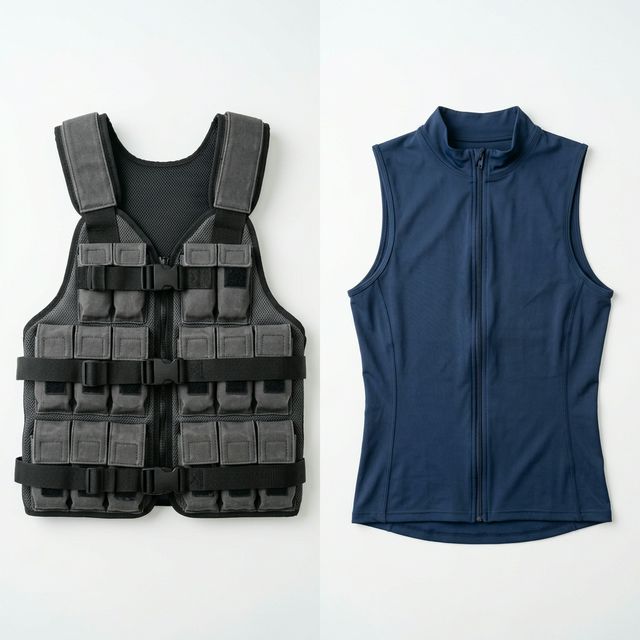
- A vest is built for structured sessions. Adjustable closures mean the pressure can be tuned up or down in seconds, and peeled off between tasks. Pediatric OT photos usually show vests for exactly that reason: they are session tools with an exit, not uniforms. The adult fork — wear windows, chest-measure sizing, and the contraindication list — is on compression vests for adults.
Rules of thumb, hedged: choose clothing when the hard window is long and social (classroom, commute, open office) and the wearer wants the input invisible. Choose a vest when you want a timed block of firmer input, the ability to adjust mid-day, or a trial before committing to a garment the wearer will forget they can take off. Weight rather than squeeze is its own fork — weighted vest vs compression vest — because pounds and elastic fail differently.
Some households end up with both: a light shirt for school days, a vest for after-school regulation blocks. That is a rotation, not a stacking instruction — wearing both at once on day one is a skip further down this page.
Types of compression clothing — what the listing actually is
Compression vests
Torso squeeze with velcro, elastic panels, or neoprene. Easier on/off than a pullover. Common in pediatric OT photos. “More pressure” is not automatically better.
Best for: people who want torso input they can peel between tasks.
Named stubs we already track: Harkla (Amazon compare — confirm the size chart still matches the vest you think you are buying), Compresso-T. Kids vs adult: compression vests for autism and ADHD. The adult fork — SPD wear schedules, ADHD stimulation framing, chest-measure sizing, and contraindications — is compression vests for adults. Browse sensory vests
Compression shirts and tanks
Circumferential fabric around torso and sometimes arms. Looks like athletic wear. The discreet school or work trial.
This is also the garment class most adults actually live in, because it hides under a dress shirt or school polo and nobody asks about it. What the listing usually means by fabric: nylon-spandex or polyester-spandex blends, which wick sweat and keep their shape; cotton-rich “compression” tops, which feel softer but bag out faster and cook in warm rooms. Flatlock or bonded seams matter more than the pressure claim — a raised seam under a strap is the thing that ends the trial, not a missing mmHg number. Sizing is a chest-measure job, not a t-shirt-size job (more in the fit section below).
Best for: teens and adults who do not want a visible vest, and anyone whose hard window is the length of a school or work block. Budget path: athletic compression shirts. Office-specific layering notes — matte finishes, dress-sock adds, what survives a meeting — live on compression clothing at work. Browse compression shirts · Browse tanks
Shorts and leggings
Lower-body input while sitting or walking. Waistband comfort matters more than a printed hug.
Short-length (bike-short style) layers are the quiet win for desk days: input across hips and thighs without the heat of full leggings under trousers. Leggings cover more skin, which trades coverage for warmth — a real cost in summer classrooms and non-air-conditioned offices. Check the waistband construction before anything else; a wide, flat band distributes pressure, while a narrow elastic one can dig within an hour. Seams at the inner thigh are the most common comfort failure this desk sees in reviews. Browse leggings · Browse tights · Browse bike shorts
Compression socks
The one garment class in this aisle that legitimately prints mmHg — because socks descend from medical circulation products, not sensory ones. Treat the number as a circulation spec, not an SPD dose: over-the-counter bands (commonly 15–20) are usually described as light and tolerable for all-day wear, firmer bands are clinician territory, and numbness, tingling, or color change in the feet is a stop-and-ask signal, not a sizing problem. Some sensory-seeking adults report socks as the easiest first trial — small surface area, cheap, invisible at work. That is community reporting, not a study we ran. If swelling, clotting, or neuropathy is in the picture, this is a clinician product. Browse compression socks
Full-body suits and body socks
Broader input. Usually short, supervised blocks — not all-day school wear. Movement-based cousins: body socks sensory guide. Weight vs squeeze: weighted vest vs compression vest.
Compression “levels” without treating mmHg as a sensory prescription
Listings love 15–20, 20–30, and 30+ mmHg rows. Those numbers come from medical hose. Athletic and sensory garments often print them without a lab.
Use the rows as a relative hint only:
- Light (often sold as 15–20): more likely to survive a longer daytime block; may feel like regular clothes if the fabric is loose.
- Moderate (often sold as 20–30): more noticeable; better as a timed block than unsupervised all-day wear.
- Firm (30+): usually a clinician conversation, not an Amazon “SPD dose.”
Signs the garment is too tight: numbness, tingling, marks that last more than a few minutes, restricted breathing, panic. Signs it is doing nothing: it feels like a regular tee. First trial goal is noticeable and removable, not maximum squeeze.
The adult aisle: most “sensory clothing” photos are of children
Search “sensory compression clothing” and the listings skew heavily toward kids — cartoon prints, pediatric size charts, classroom photography. Adults in this aisle are often first-timers, decades past the school-OT window, with nobody having named the input for them. That awareness gap is the real adult barrier, not price: a $25–40 athletic shirt is a cheap question if the fit is honest.
What changes for adults, in this desk’s read of the listings:
- The chart, not the shirt size. Adult sensory and athletic tops are graded by chest or hip measure. Ordering your usual t-shirt size is how people end up with a garment that is either decoration or a tourniquet.
- Visibility becomes the spec. Adults mostly want input that reads as athletic wear or underwear, not equipment. Matte fabric, flat seams, neutral colors — the workplace page covers this in depth at compression at work.
- Nobody is supervising. A child’s wear schedule has a parent and often an OT attached. An adult has a calendar and a commute. That makes independent removal and honest self-monitoring the whole safety story — the adult vest fork on compression vests for adults is written for exactly that solo context.
- The rest of the toolkit is not clothing. If the hard window is at home rather than on the body, a regulation corner may out-work any garment: the adult sensory room guide covers lighting, weight, texture, and WFH break patterns for autistic and ADHD adults.
Safety rules this desk will not soften
- Heat. Neoprene and dense panels trap sweat. Breathable fabric or shorter blocks in warm rooms.
- No infants or children under 2. Do not use compression garments on them.
- Ages 2–4. Awake adult in the room, plus pediatric or OT guidance when the need is complex.
- Breathing, posture, and communication stay normal. Torso garments should not pin the chest or mute speech.
- A way out. Independent removal or a clear stop signal. If a child cannot undo the closure, you stay.
- No sleep use unless a clinician named that product and that person. Nighttime weight is a weighted blanket problem when used safely — not a leftover anxiety URL.
- Stop for overheating, distress, tingling, lingering welts, restricted breathing, or unusual fatigue.
- Ask first for asthma, circulation issues, seizures, mobility limits, severe claustrophobia, or fragile skin.
A simple trial log helps: garment, minutes, setting, comfort, warning signs, whether they wanted it again. That is a shopper log, not an assessment.
A starting schedule — not a clinic plan
The nervous system habituates. All-day wear can make the squeeze disappear, then someone tightens the vest. That is the wrong fork.
- Week 1: 15–30 minutes for children, 30–60 minutes for adults, if comfortable.
- Later weeks: add time only if the wearer still wants it and warning signs stay gone.
- Use it before known hard windows — transitions, desk work, errands — not as a 24/7 uniform.
- Breaks: off for at least an hour or two between sessions, or sooner for heat or resistance.
- Sleep: most OT-flavored notes skip overnight compression.
What OT-flavored guidance commonly suggests, hedged: compression as scheduled blocks tied to specific windows, not as background. Many OT write-ups describe a wear-then-review pattern — wear for the predictable hard window, log what changed, adjust the block, review again after a couple of weeks. Common session lengths in pediatric practice land in the 15–30 minute range worn a few times a day rather than one long stretch; adult community reporting skews longer for light shirts. These are patterns from OT-adjacent sources and community threads, not a protocol we tested. A qualified OT builds the actual schedule for the actual person — that referral is the product, not a firmer garment.
Coming off a schedule (weaning)
A garment that helped in September can be unnecessary by spring. Bodies, routines, and sensory profiles move. If the wearer stops asking for it, or the hard window dissolves, taper rather than debate: shorten the blocks first, then drop to the hardest remaining window only, then stop. Some wearers ask for it again during disrupted weeks (new school term, travel, illness) — that is a routine re-entry, not a dependency. What would prompt a real conversation: distress when the garment is unavailable, wear creeping past the planned windows, or pressure seeking that keeps escalating. Any of those is an OT or clinician chat, not a bigger size.
Fit under regular clothes: sizing practicalities
The under-clothing layer is where most adult trials fail, and it is a measuring problem before it is a tolerance problem:
- Measure the chest (or hip, for lower-body) and read the chart. Not your t-shirt size, not “adult small” in the title. Charts vary between brands enough that a medium in one is a large in another.
- The two-finger check. You should be able to slide two fingers flat under the fabric at the sternum without forcing. Full breath, normal speech. If not, size up — do not “break it in.”
- Expect one garment per size guess. Buy where returns work, and do not stack purchases before the first trial answers.
- Under vs over matters. A shirt under a fitted dress shirt needs a matte finish and flat seams or it prints through. Over a tee, shine and seams matter less.
- Elastic is a consumable. Daily-wear garments commonly lose meaningful tension within a year of machine drying. Cold wash, air dry, and treat “the squeeze is gone” as the replacement signal — garment care, not a therapy schedule.
Rotate with other input so one garment is not the whole day: shirt in the morning, a lap pad at a desk, movement at midday, a removable blanket at night if that is already a safe tool. Scheduling sibling: sensory diet with deep pressure.
Children often do better with adjustable vests they can peel. Adults often prefer a shirt under regular clothes. Awareness is the adult barrier — a $25 athletic shirt is the cheap question, not a medical-grade suit.
When to skip compression clothing for sensory processing
Skip a printed mmHg row treated as an SPD prescription. If you need medical hose, that is a clinician product.
Skip kids vest sizing sold as adult SPD wear. Chest measure.
Skip overnight compression on a child, or on anyone who cannot remove it, unless a clinician named that setup.
Skip forcing a garment during an active meltdown or shutdown. Consent first. Adding tight fabric in distress can make things worse.
Skip a full-body suit as all-day school wear because a photo looked clinical.
Skip stacking vest plus shirt plus leggings plus a blanket on day one.
Skip a no-name “OT-approved autism compression” badge we cannot verify.
Skip this aisle if the real leak is noise, light, or a seating change. Tools on sensory tools at work may be the better first spend.
Skip heat-trapping fabric for heat-sensitive wearers. Neoprene vests and dense panels in a summer classroom or a warm commute are a skip photo, not a toughness test. Some sensory profiles include strong heat intolerance; for those wearers, more coverage is worse coverage.
Skip sizing down “for more input.” The two-size-down hack shows up in reviews and it is how numbness, restricted breathing, and panic get rebranded as therapy.
Skip if the garment only “works” when the wearer cannot communicate. A tool that needs silence is not working.
Skip and consult an OT or clinician if: breathing, circulation, skin, or seizure conditions are in play; if a child under five needs complex support; or if two or three honest weeks of logged trials show no window where the garment helped. That last one is not a failure — it is the trial doing its job by ruling the tool out cheaply.
Listing checks before you buy an SPD garment
These are listing checks from the DeepPressureStimulation.com editorial team — charts and photos, not a clinic we sat in.
- Confirm squeeze vs weight on the SKU. Harkla and Compresso-T are elastic. A proprioceptive weighted vest adds pounds.
- Read the closure. Velcro or a side zip beats a pullover if the wearer may need it off fast.
- Check the size chart against a chest or waist measure, not “age 8” or “adult small” in the title. Two charts, two brands, two different mediums.
- Look at fabric and heat. Shiny neoprene in a summer classroom is a skip photo.
- Confirm independent removal. If the model cannot undo it, you are the exit.
- Read the return window. A sensory response is days of short blocks, not an unboxing.
- For adults: check the photos are of adults and the chart is graded by measure. Pediatric charts quietly ship inside “one size” adult listings.
- Existing ASIN already used on this URL:
B07MTJZX58(Harkla). Do not invent new ASINs. Search links stay ondeeppressurestimulation-20. - How this site is paid: How We Make Money.
Compare Harkla-style vests · Compare compression shirts
Frequently Asked Questions
Can I wear compression clothing all day?
Some adults tolerate a light shirt during work hours. Start with short trials, take breaks, and stop for heat, distress, tingling, or restricted breathing. All-day wear is a later decision, not a default.
Is compression clothing the same as a compression vest?
No. Clothing is the category. A vest is one torso tool, usually with adjustable closures. Shirts, leggings, and suits are other shapes.
What is sensory compression clothing for adults?
Elastic garments — shirts, tanks, shorts, socks — worn for steady proprioceptive input rather than athletics. Most adults run the trial invisibly under regular clothes, sized by chest measure. It is a support tool to trial, not a treatment.
Compression shirt or vest first?
Shirt for long, hidden wear during school or work blocks. Vest for adjustable, timed sessions you can peel off and tune. Some people end up with both and rotate them rather than stack.
Will insurance cover compression garments for SPD?
Sometimes, when a clinician writes them into a plan. Coverage varies. Ask the plan. We are not your billing desk.
Can compression clothing help with meltdowns?
It may help some people before a predictable hard window. It should not be forced during distress. Follow the person's communication and remove the garment if they resist.
How do I wean off a compression garment?
Shorten the blocks, then drop to the hardest window only, then stop. Re-entry during disrupted weeks is routine, not dependency. Escalating pressure or distress without it is a clinician chat.
How do I wash compression garments?
Cold gentle cycle, air dry. Heat and fabric softener kill elastic. Daily-use garments often lose tension within a year.
Frequently Asked Questions
Can I wear compression clothing all day?
Light shirts, maybe. Start short. Off for warning signs.
Is compression clothing the same as a compression vest?
Vest is one shape inside a bigger category.
What is sensory compression clothing for adults?
Elastic garments worn for input, not athletics, usually hidden under clothes and sized by measure.
Compression shirt or vest first?
Shirt for hidden all-block wear; vest for tunable timed sessions.
Will insurance cover it?
Ask the plan and the clinician. We do not bill.
Can it help with meltdowns?
Not as a restraint. Consent, then off if they resist.
How do I wash it?
Cold, air dry. Heat kills the squeeze.
Sources and Further Reading
- National Autistic Society: Sensory differences
- American Occupational Therapy Association: Evidence-based practice resources
- AOTA: Sensory integration and sensory processing
- STAR Institute for Sensory Processing
- Watling & Hauer systematic review in AJOT
- VandenBerg weighted vest pilot study
- CDC: Autism spectrum disorder signs and symptoms
Explore More
DeepPressureStimulation.com editorial team
Site desk, DeepPressureStimulation.com
The DeepPressureStimulation.com editorial team writes guides to weighted blankets, compression wear, and sensory tools from peer-reviewed research, published occupational-therapy guidelines, manufacturer specifications, and community reviews. The desk is not a licensed occupational therapy practice or medical clinic, and nothing here is medical advice — always consult a qualified healthcare provider before starting a new therapy.
Stay Informed, Stay Calm
Get science-backed articles on deep pressure therapy, weighted blankets, and sensory tools delivered to your inbox. No spam — just calm.
📬 No spam, ever. Unsubscribe anytime.