Weighted Blanket vs Comforter: What's the Difference?
Weighted blanket vs comforter: listed pounds vs loft, body size vs bed size, and when layering beats a replacement buy.
DeepPressureStimulation.com editorial team
Site desk, DeepPressureStimulation.com ·
📖 Table of Contents
Affiliate Disclosure: As an Amazon Associate we earn from qualifying purchases. Some links on this page are affiliate links - if you buy through them, we receive a small commission at no extra cost to you. This never influences which products we recommend. Full disclosure policy · How we make money
Weighted Blanket vs Comforter: What’s the Difference?
Last Updated: September 12, 2026 | Byline: DeepPressureStimulation.com editorial team
People use the words “blanket” and “comforter” interchangeably until they try sleeping under a 15-pound weighted blanket for the first time. Then the difference becomes obvious, and physical.
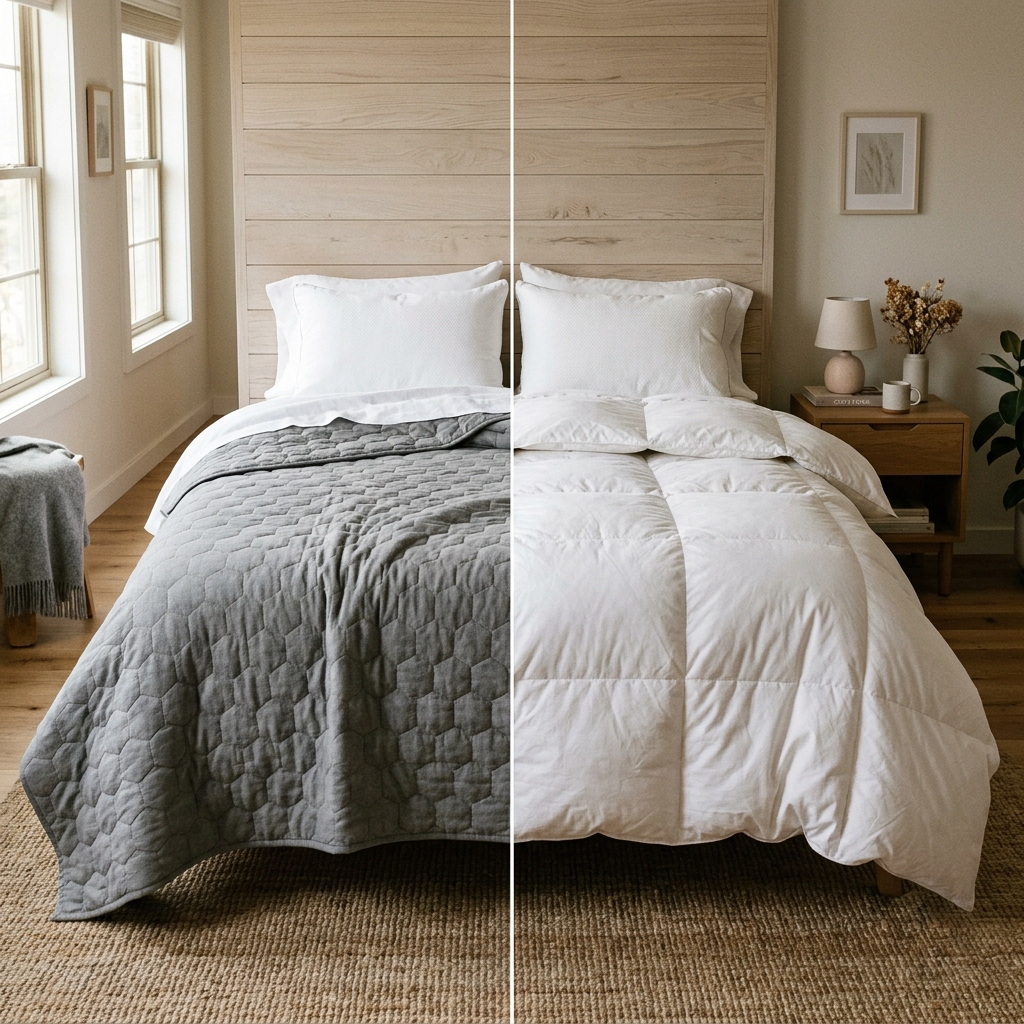
A comforter is designed to insulate. A weighted blanket is designed to apply pressure. They look similar folded on a shelf, but they’re built for completely different purposes, with different materials, different price points, and different effects on your nervous system.
A 2020 randomized controlled trial published in the Journal of Clinical Sleep Medicine found that weighted blankets significantly reduced insomnia severity and improved daytime functioning in adults with anxiety disorders (Ekholm et al., 2020). No comforter has ever produced comparable results, because no comforter delivers deep pressure stimulation.
This is a research-desk compare, not a sleep-lab diary. We use listed pounds, loft, and care tags. We did not run a comforter-vs-blanket trial. A weighted blanket is not a medical device, and “therapeutic pressure” on a product title is marketing, not a diagnosis.
This guide breaks down every meaningful difference between weighted blankets and comforters so you can decide which belongs on your bed — or whether you need both.
TL;DR: Comforters use lofty fill (down or polyester) to trap heat and provide warmth. Weighted blankets use dense fill (glass beads or steel shot) sewn into small compartments to deliver 10-25 lbs of therapeutic deep pressure. Comforters are lighter, fluffier, and designed for temperature regulation. Weighted blankets are heavier, flatter, and designed for anxiety reduction and sleep improvement. Many people layer a weighted blanket under or over a comforter for both benefits.
How a Comforter Works
A comforter is a thick, quilted blanket filled with insulating material — typically down feathers, down alternative (polyester fiber), or a blend. The fill creates air pockets that trap body heat and keep you warm.
Construction basics
- Shell fabric: Cotton, polyester, or microfiber outer shell
- Fill material: Goose down, duck down, or polyester fiberfill
- Fill power: Down comforters are rated by fill power (400-900+), which measures loft and insulation. Higher fill power means more warmth with less weight.
- Baffle construction: Sewn-through or baffle-box stitching keeps fill from shifting
Key characteristics
- Weight range: 2-8 lbs for a queen size
- Primary purpose: Temperature regulation and warmth
- Therapeutic benefit: Comfort and coziness, but no deep pressure stimulation
- Breathability: Varies by material — down breathes well, polyester less so
- Typical cost: $30-400 depending on fill quality
A comforter sits on top of you like a cloud. It doesn’t press against you. Even the heaviest down comforter exerts minimal pressure per square inch because the fill is designed to loft upward, not compress downward.
How a Weighted Blanket Works
A weighted blanket uses dense fill material — most commonly glass microbeads — distributed across small quilted compartments to deliver even, sustained pressure across the body. This pressure activates deep pressure stimulation (DPS), a sensory input that triggers parasympathetic nervous system responses.
The 2008 Mullen et al. study in Occupational Therapy in Mental Health found that 78% of participants preferred the weighted blanket as a calming modality, with 63% reporting measurably lower anxiety (Mullen et al., 2008).
Construction basics
- Shell fabric: Cotton, bamboo, minky polyester, or Tencel
- Fill material: Glass microbeads, steel shot beads, or poly pellets (glass beads are the current standard)
- Compartments: Small quilted pockets (typically 4x4” or 5x5”) prevent bead migration
- Some designs: Knitted weighted blankets (like Bearaby) use dense yarn with no filler at all
Key characteristics
- Weight range: 10-25 lbs for adults, 3-8 lbs for children
- Primary purpose: Deep pressure stimulation for anxiety reduction, sleep improvement, and nervous system regulation
- What the studies actually measured: Ekholm et al. (2020) reported lower insomnia severity and better daytime function in a clinical sample. That is not the same as a cortisol, serotonin, or melatonin shopping spec.
- Breathability: Varies. Glass bead blankets tend to trap heat. Knitted options breathe better.
- Typical cost: $40-250
For the full science behind this mechanism, read our complete guide to deep pressure stimulation.
Side-by-Side Comparison
| Feature | Comforter | Weighted Blanket |
|---|---|---|
| Weight | 2-8 lbs | 10-25 lbs |
| Fill material | Down or polyester fiber | Glass beads, steel shot, or dense yarn |
| Primary purpose | Warmth | Deep pressure therapy |
| Pressure per sq inch | Negligible | Significant — proportional to blanket weight |
| Therapeutic evidence | None specific | Multiple RCTs showing anxiety and sleep benefits |
| Breathability | Good (especially down) | Variable — often runs warm |
| Fluffiness/Loft | High | Low — designed to lay flat and heavy |
| Machine washable | Most yes | Some yes; many require spot cleaning or duvet cover |
| Typical lifespan | 5-15 years | 2-5 years (beads can shift or clump) |
| Price range | $30-400 | $40-250 |
| Sizing | Matches or exceeds mattress size | Sized to body, not bed (shouldn’t hang over edges) |
The sizing difference matters
Comforters are designed to drape over the sides of your bed for visual appeal and full coverage. A queen comforter is typically 88x92 inches.
Weighted blankets are sized to your body, not your bed. A queen weighted blanket is usually 60x80 inches — just enough to cover a person from shoulders to feet without heavy overhang. If the blanket hangs too far over the edge, the weight pulls it off your body and onto the floor. This is why weighted blankets look smaller than comforters even when both are labeled “queen.”
Citation Capsule: A comforter uses lofty fill to create warmth through trapped air pockets, weighing 2-8 lbs with no therapeutic pressure. A weighted blanket uses dense fill in small compartments to deliver 10-25 lbs of deep pressure stimulation. Ekholm et al. (2020) found weighted blankets significantly reduced insomnia severity in a randomized controlled trial. The two serve fundamentally different sleep functions.
Can You Use a Weighted Blanket as a Comforter?
Technically, yes. Practically, there are trade-offs.
A weighted blanket provides warmth — the glass beads retain some heat, and the fabric layer provides insulation. In cool weather, many people find a weighted blanket alone is warm enough without adding a comforter.
But weighted blankets lack the loft and breathability of a quality comforter. On cold winter nights, they may not insulate as well as a down comforter. On warm summer nights, the dense fill can trap too much body heat.
The layering strategy
Many people get the best of both worlds by layering:
- Option A: Weighted blanket directly on the body, comforter on top for additional warmth in winter
- Option B: Sheet, then weighted blanket, then a lightweight comforter — gives you the ability to kick off the comforter without losing the weight
- Option C: Weighted blanket only in spring and fall; add or swap for a cooling comforter in summer
Option B is the desk default because warmth and pressure come apart. If you get hot, push the comforter aside and the weight stays. If you want warmth without weight, use just the comforter. We did not sleep-test a layering fleet; this is how the two products are built, not a diary.
If heat is a concern, check our guide on cooling weighted blankets for hot sleepers.
Who Should Choose a Weighted Blanket Over a Comforter?
A comforter is a bedding staple. Almost everyone has one. The question is whether you should add a weighted blanket to your sleep setup, not whether you should replace the comforter entirely.
Consider a weighted blanket if you experience:
- Difficulty falling asleep (sleep onset insomnia)
- Nighttime anxiety or racing thoughts
- Restlessness during sleep, including restless leg syndrome
- Sensory processing differences (autism, ADHD, SPD)
- General anxiety that worsens at bedtime
- A preference for feeling “held” or compressed during rest
Stick with just a comforter if:
- You sleep well already and don’t experience nighttime anxiety
- You run very hot and can’t tolerate additional weight
- You have respiratory conditions that make chest compression uncomfortable
- You share a bed and your partner doesn’t want the extra weight
For anxiety-specific guidance, see our best weighted blankets for anxiety guide. If a heavy layer already feels like a trap, read when weighted blankets make anxiety worse before you replace a comforter.
What to Look for When Buying Each
Comforter buying tips
- Fill type: Down is warmer per ounce and more breathable but costs more. Down alternative is hypoallergenic and cheaper.
- Fill power: For down comforters, 600+ fill power provides good warmth without excessive weight.
- Construction: Baffle-box construction prevents cold spots better than sewn-through quilting.
- Size: Get the right size for your bed, including adequate overhang.
Weighted blanket buying tips
- Weight: Follow the 10% body weight guideline. A 150-lb person should start with a 15-lb blanket.
- Fill material: Glass microbeads are cooler, quieter, and denser than poly pellets.
- Compartment size: Smaller compartments (4x4” or 5x5”) distribute weight more evenly.
- Removable cover: Makes washing dramatically easier.
Recommended weighted blankets:
- YnM Weighted Blanket — Glass bead fill, multiple weight options, budget-friendly starting point
- Bearaby Cotton Napper — Chunky knit organic cotton, no beads, excellent breathability
- Luna Weighted Blanket — Oeko-Tex certified, machine washable, glass beads with soft cotton shell
For blankets that won’t overheat, read our weighted blanket weight guide.
When to skip a weighted blanket as a comforter swap
Skip the swap if you already sleep well and only wanted a fluffier duvet. A comforter is the warmth tool. Buying 15 lb of glass beads to “upgrade bedding” is how people end up overheating and then blaming the brand.
Skip a one-for-one replacement if you share a bed and only one sleeper wants weight. Two twin throws beat one king “couple” blanket that neither person can kick off independently. The couples queen/king guide is that page.
Skip overnight weight if you cannot lift the listed pounds off your chest, have untreated apnea, or already panic under tight covers. Use the apnea caution and the anxiety-worse guide.
If heat is the only complaint, fix the comforter first (lighter fill, cooler sheet) before you add beads. The sleep hub is the better start than a “weighted comforter” title.
Listing checks the Amazon title skips
- Confirm the product is actually weighted. Some “weighted comforter” titles are standard comforters with a heavier fill claim and no stated pound rating.
- Match listed pounds to about 10% of body weight, then match listed size to the sleeper, not the bed. A king-size 15 lb blanket spreads too thin to feel like a 15 lb throw.
- Read cover vs. insert care. A comforter duvet cover and a weighted insert are two laundry jobs. See how to wash a weighted blanket.
- If you want both warmth and pressure, plan a layer: breathable weighted layer plus a lighter comforter you can kick off. The cooling weighted blanket guide and weighted blankets hub cover that split.
- Compare a known insert before a mystery “weighted comforter”: YnM, Bearaby Cotton Napper, and Luna list pounds and cover care more clearly than hybrid titles.
- Check internal duvet ties if you plan to stuff the weighted layer into a comforter cover. Untied inserts slide to the foot of the bed and the “15 lb” feel disappears.
- Note the return window. Slept-on weighted bedding is a hard return. Keep the bag through three nights of layering, not one.
The Bottom Line
A comforter keeps you warm. A weighted blanket keeps you calm. They’re not interchangeable, and comparing them is a bit like comparing a pillow to a neck brace — similar location, completely different function.
If your only goal is comfortable sleep temperature, a comforter is all you need. If you struggle with anxiety, insomnia, or restlessness at night, a weighted blanket addresses a problem that no comforter can touch. And if you want both warmth and pressure, layer them.
Citation Capsule: Comforters and weighted blankets serve distinct sleep functions — thermal regulation vs. deep pressure stimulation. Research supports weighted blankets for reducing insomnia severity (Ekholm et al., 2020) and anxiety (Mullen et al., 2008). For most people, the ideal setup is a weighted blanket for pressure with a comforter for warmth, layered to allow independent adjustment of each.
Frequently Asked Questions
Can a weighted blanket replace my comforter entirely?
In mild weather, yes. Many people use only a weighted blanket during spring and fall. In winter, most people find they need additional insulation from a comforter or duvet because weighted blankets lack the loft that traps warm air. In summer, a weighted blanket alone may actually be too warm, so a cooling sheet might be the better pairing.
Is a weighted blanket warmer than a comforter?
Not necessarily. Weighted blankets feel warmer because the dense fill sits close to your body, trapping heat. But a high fill-power down comforter provides more actual insulation per ounce. The “warmth” from a weighted blanket is more about heat retention from contact than thermal insulation.
Can I put a weighted blanket inside a duvet cover?
Yes, and many weighted blankets are designed for this. Using a duvet cover protects the weighted blanket from body oils and sweat, extends its lifespan, and makes cleaning much simpler. Just make sure the cover has internal ties or loops to keep the heavy blanket from shifting inside.
Why are weighted blankets so much smaller than comforters?
Weighted blankets are sized to cover your body, not your bed. If a 15-lb blanket hung 12 inches over each side of the mattress, the weight would pull it toward the floor and off your body. The smaller dimensions keep the full weight on you, which is the entire point.
Do weighted blankets last as long as comforters?
Generally no. A quality down comforter can last 10-15 years. Most weighted blankets last 2-5 years before the fill begins clumping or shifting. Knitted weighted blankets (no beads) tend to hold up longer. Proper care — using a duvet cover, washing gently, and drying flat — extends the lifespan of any weighted blanket. Those steps are spelled out in how to wash a weighted blanket.
Frequently Asked Questions
Can a weighted blanket replace my comforter entirely?
In mild weather, yes. In winter, most people need a comforter for additional insulation since weighted blankets lack the loft for trapping warm air. In summer, a weighted blanket alone may be too warm.
Is a weighted blanket warmer than a comforter?
Weighted blankets feel warmer because the dense fill sits close to your body and traps heat, but a quality down comforter provides more actual thermal insulation per ounce. The difference is contact heat vs. air-pocket insulation.
Can I put a weighted blanket inside a duvet cover?
Yes — many weighted blankets are designed for this. A duvet cover protects from body oils and sweat, extends lifespan, and makes cleaning easier. Look for covers with internal ties to prevent shifting.
Why are weighted blankets smaller than comforters?
Weighted blankets are sized to your body, not your bed. If they hung over the edges, the weight would pull the blanket off your body and onto the floor. Smaller dimensions keep the full weight where it's needed.
Do weighted blankets last as long as comforters?
Generally no. Quality comforters last 10-15 years; most weighted blankets last 2-5 years before fill shifts or clumps. Knitted styles without beads tend to hold up longer. Using a duvet cover extends lifespan.
DeepPressureStimulation.com editorial team
Site desk, DeepPressureStimulation.com
The DeepPressureStimulation.com editorial team writes guides to weighted blankets, compression wear, and sensory tools from peer-reviewed research, published occupational-therapy guidelines, manufacturer specifications, and community reviews. The desk is not a licensed occupational therapy practice or medical clinic, and nothing here is medical advice — always consult a qualified healthcare provider before starting a new therapy.
Stay Informed, Stay Calm
Get science-backed articles on deep pressure therapy, weighted blankets, and sensory tools delivered to your inbox. No spam — just calm.
📬 No spam, ever. Unsubscribe anytime.