Athletic Compression Shirts: The Sensory Autism Hack
Athletic compression shirts as a sensory trial: when not to size down, and listing checks Amazon skips.
DeepPressureStimulation.com editorial team
Site desk, DeepPressureStimulation.com ·
📖 Table of Contents
Affiliate Disclosure: As an Amazon Associate we earn from qualifying purchases. Some links on this page are affiliate links - if you buy through them, we receive a small commission at no extra cost to you. This never influences which products we recommend. Full disclosure policy · How we make money
Athletic Compression Shirts: The Budget-Friendly Autism Sensory Clothing Hack
Updated September 12, 2026 | Byline: DeepPressureStimulation.com editorial team
Finding effective tools for sensory regulation often feels like navigating a maze of premium price tags. For neurodivergent individuals who benefit from a comforting physical squeeze, the cost of specialized garments can add up quickly. Fortunately, standard athletic compression shirts are a highly discreet and durable alternative for those who seek the benefits of proprioceptive input without the high markup of therapeutic brands.
Published OT catalogs often list simple spandex shirts for $40 to $70 each. Mass-market athletic base layers use similar nylon-spandex blends at a lower price. That is a shopping observation, not a clinic protocol.
This is a research-desk note from the DeepPressureStimulation.com editorial team. We compare brand size charts, fabric content, and community write-ups. We did not run a shirt trial, and we are not a licensed occupational therapy practice. Compression wear is not a treatment for autism, ADHD, or anxiety.
The useful part of this page is not “always size down.” It is knowing when not to. If you already know you want a named sensory vest, use the adult compression vest guide or the how-to on compression clothing for anxiety.
Affiliate disclosure: This article contains affiliate links. If you purchase through our links, we may earn a commission at no extra cost to you. Our recommendations prioritize physical comfort and safety, backed by genuine community feedback.
TL;DR: An athletic compression shirt can be a cheap, discreet trial if the seams are flat, the shirt is tagless, and you can still take a full breath. Start on the brand chart, not two sizes down. Size down one only after a tape measure and a two-finger check. Skip the hack if the wearer cannot get the pullover off without help.
The “Disability Tax” of Specialized Sensory Clothing
The “disability tax” refers to the significant price markups placed on products designed for disabled or neurodivergent individuals compared to functionally similar mainstream items. In the case of autism compression clothing, specialized brands frequently sell simple spandex-blend shirts for three to four times the price of high-performance sportswear, even though both utilize similar elastic fibers like spandex and polyester.
For families and autistic adults, this pricing difference is more than just an inconvenience; it limits access to regular sensory support. Buying a week’s worth of specialized t-shirts can cost upwards of $300. In contrast, major athletic brands mass-produce compression gear, lowering production costs and making it possible to find high-quality shirts for $12 to $25.
Beyond the cost savings, mainstream athletic wear offers several advantages. Sportswear is designed for intense movement and repeated, heavy washing. The fabrics are engineered to wick sweat, hold their elastic tension, and resist fraying. In addition, specialized sensory clothing often looks different, featuring distinct colors or therapy-focused designs. Athletic compression shirts are completely discreet, looking like standard base layers or undershirts under a school uniform, office attire, or everyday clothing.
The Sensory Science: Why Compression Helps Autistic Individuals
Sensory compression garments work by supplying constant, even proprioceptive input across the torso, which stimulates muscle and joint receptors to help organize sensory processing. For many autistic individuals and those with sensory processing differences, this steady tactile squeeze functions as deep pressure stimulation, triggering a calming shift in the autonomic nervous system.
Research supports the role of proprioceptive input in emotional and physiological regulation. Our nervous systems rely on receptors in our joints and muscles, along with skin tactile sensors, to understand where our body is in space. When an individual has sensory processing differences, they may experience sensory seeking (craving strong physical input to feel grounded) or sensory avoiding (feeling overwhelmed by light, unpredictable touch).
Snug compression shirts act as a sensory filter. The firm, predictable pressure helps dampen the impact of sudden environmental inputs, such as bright lights, loud noises, or light touch from crowds. According to community discussions across neurodivergent forums on Reddit, many autistic adults report that wearing a compression shirt feels like a continuous “hug” that reduces background anxiety and helps them focus during school or work.
For a deeper look at this underlying mechanism, check out our science of deep pressure stimulation guide.
The Hack: Sizing Down Athletic Compression Shirts
The useful trial is a tagless athletic shirt that matches a current chest measurement, not a guess from a t-shirt drawer. Mainstream athletic compression is built for muscle support and sweat, not an anxiety dose. Some shoppers get a firmer hug by sizing down one from the brand chart. That is a trial, not a protocol.
Desk order:
- Take a chest measurement. Widest part of the chest, tape level.
- Open the brand chart. That number is your athletic size. Start there if you are new to compression or heat-sensitive.
- Size down one only after the two-finger check. If the chart says Medium, a Small is the first firmer trial — if you can still slide two fingers at the sternum and take a full breath.
- Do not size down two as a default. Extra-small-from-medium is how breathing gets restricted and how kids cannot get a pullover off. If a sensory seeker asks for more squeeze after a week in a one-size-down shirt, try a named vest with a closure, not a second size drop.
- Read the spandex line. 12–20% elastane with polyester or nylon is the usual athletic blend. Under 10% stretches out. The percentage is a recovery hint, not a therapeutic dose.
A shirt is too tight if it limits a full breath, leaves deep marks that last, pinches the armpits, or raises panic. Size up or stop.
Recommending the Best Budget-Friendly Athletic Brands
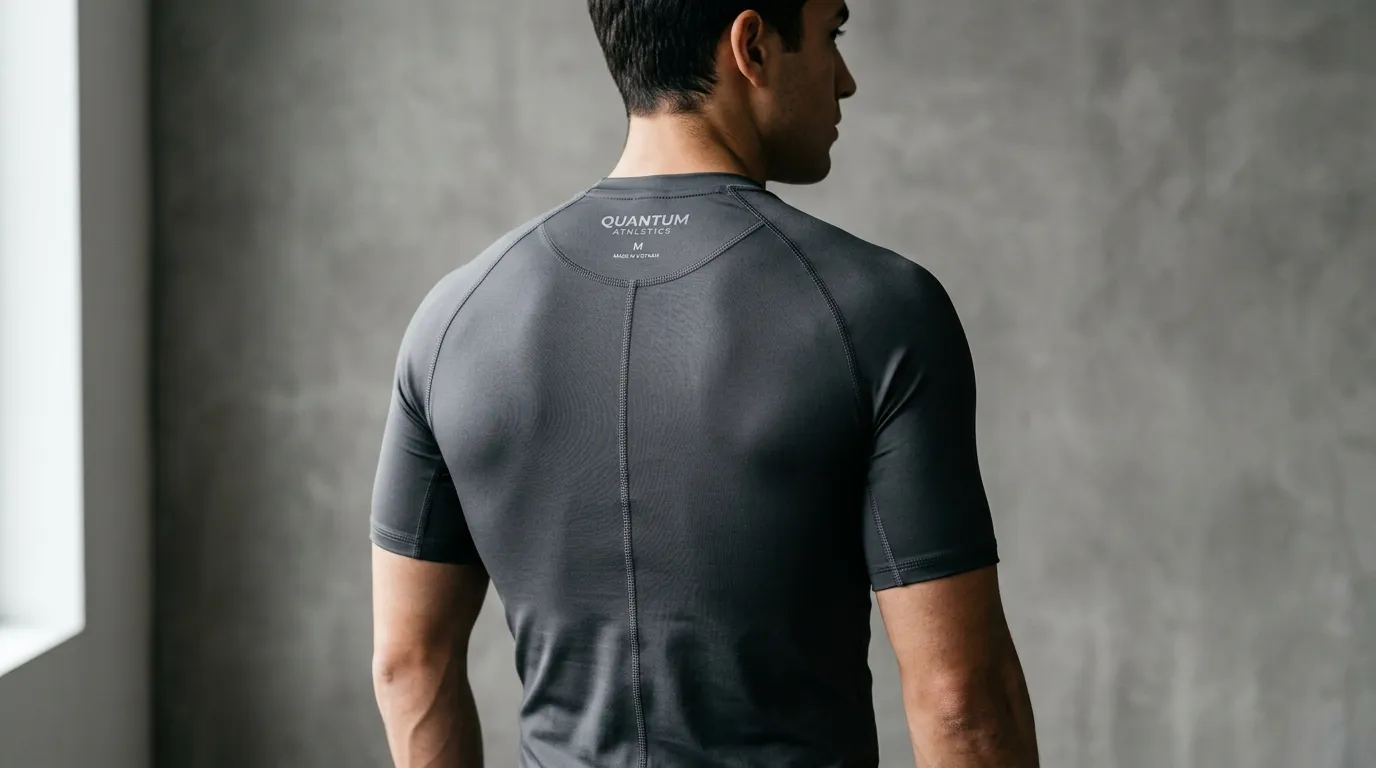
Selecting the right athletic brand for autism compression clothing means looking for tagless designs, smooth flatlock seams, and high spandex content to ensure both comfort and longevity. Some brands specialize in ultra-tight athletic fits, making them ideal candidates for this sensory hack.
Here are the top three brands recommended by sensory communities and occupational therapy blogs for budget-friendly compression trials:
1. Under Armour HeatGear Compression Shirts
Under Armour is a pioneer in compression wear. The HeatGear line is particularly suited for sensory use because of its thin, highly breathable fabric and excellent spandex content (typically 16% to 20% elastane). The seams are flatlocked to lay flush against the skin, minimizing tactile irritation, and the shirts are entirely tagless.
2. Nike Pro Dri-FIT Compression Shirts
Nike Pro compression shirts offer a premium fit and excellent structure. While they sometimes have slightly lower spandex percentages (around 10% to 15%), the quality of the weave provides a highly durable, structured squeeze that holds its shape through hundreds of wash cycles. They are ideal for discreet wear under school uniforms.
3. TSLA Compression Shirts
For those on a strict budget or looking to build a large wardrobe, TSLA is a highly popular brand on Amazon. They offer packs of two or three shirts for the price of a single name-brand shirt. They feature flatlock seams, moisture-wicking material, and around 13% spandex. Many parents on Reddit cite TSLA as their go-to option for school-aged kids.
Compression Hack Comparison Matrix
The table below compares the top athletic brands used for this sensory hack, detailing how their material construction and pricing align with sensory needs.
| Brand & Model | Spandex Content | Key Sensory Feature | Durability Rating | Average Price | Amazon Affiliate Link |
|---|---|---|---|---|---|
| Under Armour HeatGear | 16% - 20% Spandex | Ultra-smooth flatlock seams, tagless, high breathability | High (Holds shape well) | $20 - $30 | Shop on Amazon |
| Nike Pro Dri-FIT | 10% - 15% Spandex | Premium structured fit, very discreet under shirts | Exceptional | $25 - $35 | Shop on Amazon |
| TSLA Compression | 13% Spandex | Multi-packs available, cost-effective daily wardrobe | Moderate (Slightly less recovery) | $8 - $12 (per shirt) | Shop on Amazon |
Pros
- Bypasses the 200%+ specialized sensory 'disability tax' entirely
- Highly discreet and looks like normal sportswear or standard undershirts
- Sportswear fabrics offer superior durability and sweat-wicking properties
- Flatlock seams and tagless layouts reduce tactile sensory triggers
- Easy to wash and maintain due to widespread retail availability
Cons
- Requires manual testing of sized-down options to find the right pressure
- Lacks the adjustability of Velcro straps found on compression vests
- Can be difficult for very young children to put on or take off independently
Our Verdict
Sizing down standard athletic compression shirts (specifically Under Armour HeatGear or TSLA) is a highly cost-effective and discreet way to get the benefits of deep pressure stimulation. This hack allows you to build a full weekly wardrobe of sensory under-layers for the price of one or two specialized items, without sacrificing fabric durability or seam comfort.
When to skip sizing down an athletic shirt
Skip the size-down if the wearer cannot get a pullover off without help, if torso pressure already causes panic, or if the only measurement you have is a t-shirt hang-tag. Measure first. The how-to on compression clothing for anxiety is the fit page.
Skip a two-size drop entirely for kids, heat-sensitive adults, and anyone with asthma or circulation flags until a clinician says otherwise.
Skip athletic compression as a sleep shirt. Overnight squeeze is a compression sheet or a sized blanket, not a HeatGear layer.
Skip stacking a sized-down shirt under a tight vest or on top of a weighted lap pad in the same block. You will not know which input helped.
If you need on/off in a meeting, buy a vest with velcro or a side zip — Harkla or Compresso-T — instead of a pullover you have to peel.
Listing checks before you buy an athletic compression shirt
These checks come from size charts and care tags, not a wear trial we ran.
- Match a current chest measurement to the brand chart. “M/L sensory shirt” is not a size.
- Read fabric content. Spandex percent and a tagless, flatlock claim beat an “autism compression” title on a generic tee.
- Confirm it is a pullover. Athletic shirts do not have a panic zipper. If independent removal is in doubt, skip.
- Check dryer rules. Heat kills elastane. If you will tumble dry, you are buying a one-season shirt.
- Note the return window before you cut tags. Worn compression is often unsellable. Keep the bag through three short trials.
- Reuse a known ASIN before a mystery pack: Under Armour HeatGear (
B0874WTGVM) and TSLA (B086JGZR24) are the two listings already on this page. Nike Pro stays a search, not an invented SKU. - If the photos show velcro tabs, you wandered into the adult vest aisle — that page covers vest sizing windows, wearing schedules, and the ADHD stimulation frame a shirt cannot answer.
Compression Safety and Wear Guidelines
While compression shirts are a safe sensory tool for most people, applying tight garments requires caution, especially for children or individuals with communication differences. Snug garments must support regulation, not cause physical distress or safety issues.
Keep the following safety rules in mind before starting:
- Age restrictions: Never use tight compression clothing on infants or toddlers under the age of 2.
- Supervision rules: Children between the ages of 2 and 4 should only wear sized-down compression shirts under direct, awake adult supervision.
- Ensure independent removal: The wearer must be able to remove the garment independently or have a clear, reliable way to communicate when they want it taken off. Forced compression can lead to panic or sensory overload.
- Avoid sleep wear: Do not wear tight compression garments during sleep unless specifically guided by a medical professional. For nighttime proprioceptive input, consider a safely weighted blanket or compression sheet.
- Watch for physical warning signs: Immediately remove the shirt if you notice skin redness, deep indentations that persist, numbness or tingling in the arms, blue or pale fingernails, restriction in breathing, or signs of overheating.
- Consult a physician for medical conditions: Speak with a doctor before using compression wear if the individual has asthma, circulatory issues, heart conditions, or severe physical mobility limits.
For more information on structuring sensory routines safely, see our sensory diet with deep pressure guide or read our comparison of weighted vests vs compression vests. The autism hub and sensory tools hub are the aisle maps if you are still choosing a category.
Designing a Sensory Compression Wear Schedule
Like other deep pressure tools, compression shirts are most effective when integrated into a structured routine rather than worn continuously. The human nervous system naturally adapts to constant tactile input through a process called habituation, meaning the calming effect of the squeeze can fade if the shirt is worn all day without breaks.
A standard wear schedule balances active compression intervals with rest periods:
- Targeted wearing blocks: Put the compression shirt on before predictable high-stress times, such as transition periods, school hours, social outings, or focused desk work.
- The 2-to-3 hour limit: Keep compression blocks to 2 or 3 hours maximum, followed by a break of at least 1 to 2 hours to allow the nervous system to reset its tactile baseline.
- Integrate with other tools: Alternate the shirt with other sensory inputs. For example, use the compression shirt during the school or work day, transition to a weighted lap pad during evening study time, and use a weighted blanket at night.
For children, keeping a simple weekly log of when they wear the shirt, how they respond, and when they ask to take it off can help you customize the schedule to their specific sensory profile.
Explore More Compression Options
Unsure if a compression shirt is right for you? Compare vests, body socks, and other deep pressure tools on Amazon.
View Compression VestsAffiliate link — we may earn a commission at no extra cost to you.
Frequently Asked Questions
Can athletic compression shirts replace weighted vests?
Athletic compression shirts provide standard, wrap-around pressure across the upper body and arms, whereas weighted vests apply downward pressure via weight pockets. Shirts are more discreet and allow for a wider range of movement, making them better for active daily wear, while weighted vests are typically used for shorter, targeted calming sessions. Learn more in our weighted vest vs compression vest guide.
How many sizes should I size down for a sensory shirt?
Start on the brand chart. Size down one only after a tape measure and a two-finger check. Do not size down two as a default. If the wearer wants more squeeze, switch to a vest with a closure instead of a tighter pullover.
What spandex percentage should I look for?
Look for a spandex (elastane) content of at least 12% to 20%. Higher spandex percentages ensure the garment provides a firm squeeze and recovers its shape after washing. Fabrics with less than 10% spandex will stretch out quickly and fail to offer therapeutic pressure.
How do I care for athletic compression shirts to maintain their stretch?
Machine wash compression shirts in cold water on a gentle cycle. Always hang or lay flat to air dry. Heat from clothes dryers breaks down the elastic fibers over time, reducing the compression level. Avoid fabric softeners, as they coat the synthetic fibers and reduce their elasticity and moisture-wicking properties.
What are the signs that a compression shirt is too tight?
A shirt is too tight if it restricts deep breathing, pinches or chafes the skin under the arms, causes numbness or tingling in the fingers, or leaves deep red marks that do not fade within 15 minutes of taking the shirt off. If the wearer shows signs of distress or tries to pull at the collar, remove the shirt immediately.
Frequently Asked Questions
Can athletic compression shirts replace weighted vests?
Athletic compression shirts provide continuous, wrap-around pressure, while weighted vests apply downward pressure. Shirts are more discreet and permit full movement for all-day wear, whereas weighted vests are typically reserved for short, focused calming sessions.
How many sizes should I size down for a sensory shirt?
Start on the brand chart. Size down one only after a chest measurement and a two-finger check. Do not size down two as a default. If the wearer wants more squeeze, use a vest with a closure instead of a tighter pullover.
What spandex percentage should I look for?
Aim for a spandex (elastane) percentage between 12% and 20%. Mainstream shirts with high spandex content provide a more robust squeeze and retain their shape over time, while shirts with under 10% spandex stretch out too quickly to be helpful.
How do I care for athletic compression shirts to maintain their stretch?
Wash in cold water on a gentle cycle and air dry. Avoid the dryer, as high heat degrades elastic fibers and reduces the compression force. Do not use fabric softeners, which coat the fibers and weaken the stretch over time.
What are the signs that a compression shirt is too tight?
Signs of an overly tight fit include difficulty breathing, skin chafing, numbness or tingling in the hands, or red marks that linger for more than 15 minutes after removal. If the wearer exhibits panic or physical discomfort, remove the shirt immediately.
Sources and Research
- Sensory Processing and Autonomic Regulation: The role of proprioceptive input in calming the sympathetic nervous system is widely documented in occupational therapy literature. For details on sensory diets, see the American Occupational Therapy Association (AOTA) resources.
- Deep Pressure Stimulation Evidence: A systematic review in the American Journal of Occupational Therapy confirms that individualized sensory integration interventions can assist with self-regulation, though evidence for passive tools remains mixed (Watling & Hauer, 2015).
- Mainstream Sportswear Standards: Fabric specifications regarding spandex content, flatlock seams, and wear testing are based on official Under Armour HeatGear and Nike Pro technical documentation.
- Community Consensus: Practical tips on sizing down and brand suggestions are sourced from user discussions in online neurodivergent support groups and communities on Reddit.
DeepPressureStimulation.com editorial team
Site desk, DeepPressureStimulation.com
The DeepPressureStimulation.com editorial team writes guides to weighted blankets, compression wear, and sensory tools from peer-reviewed research, published occupational-therapy guidelines, manufacturer specifications, and community reviews. The desk is not a licensed occupational therapy practice or medical clinic, and nothing here is medical advice — always consult a qualified healthcare provider before starting a new therapy.
Stay Informed, Stay Calm
Get science-backed articles on deep pressure therapy, weighted blankets, and sensory tools delivered to your inbox. No spam — just calm.
📬 No spam, ever. Unsubscribe anytime.