Lap Weight for Sensory Integration: Weighted Lap Pad Guide
How to choose a lap weight for sensory integration, including weighted lap pad sizing, safety rules, classroom use, and buying criteria.
DeepPressureStimulation.com editorial team
Site desk, DeepPressureStimulation.com ·
📖 Table of Contents
Affiliate Disclosure: As an Amazon Associate we earn from qualifying purchases. Some links on this page are affiliate links - if you buy through them, we receive a small commission at no extra cost to you. This never influences which products we recommend. Full disclosure policy · How we make money
Lap Weight for Sensory Integration: Weighted Lap Pad Guide
Updated June 30, 2026 | Byline: DeepPressureStimulation.com editorial team
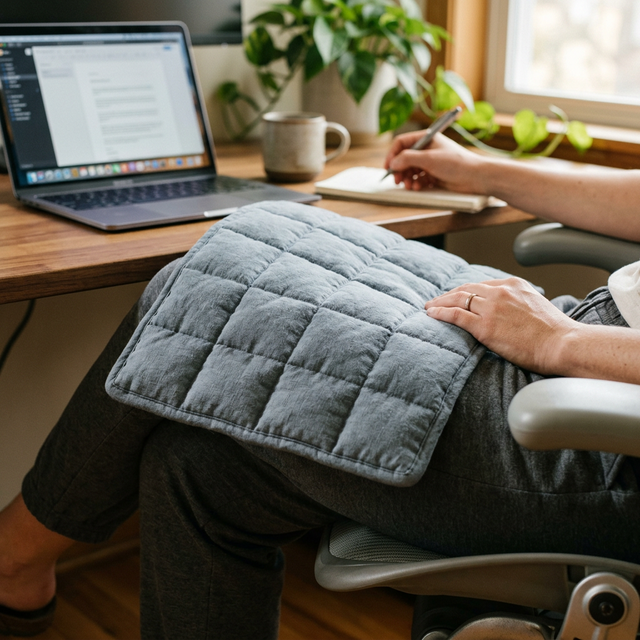
A lap weight for sensory integration is a small weighted pad placed across the thighs during seated tasks. Occupational therapists and families often call the same tool a weighted lap pad, lap weight, sensory lap pad, or classroom lap pad.
The goal is simple: provide localized proprioceptive pressure while the person stays seated, uses their hands, and can remove the weight independently. A lap weight can fit into homework, reading, therapy waiting rooms, classroom work, office focus blocks, car rides, or a broader sensory diet.
Medical disclaimer: Weighted lap pads are sensory support tools, not treatments for autism, ADHD, anxiety, insomnia, sensory processing disorder, or any medical condition. Ask an occupational therapist, pediatrician, or qualified clinician before use with young children, people who cannot remove the pad independently, or anyone with circulation, respiratory, seizure, cardiac, mobility, orthopedic, skin, or complex medical concerns.
Quick Picks: Lap Weights for Sensory Integration
| Need | Look for | Typical weight range | Compare |
|---|---|---|---|
| Classroom desk work | Quiet fabric, neutral color, washable cover | 2 to 5 lb | Classroom lap weights on Amazon |
| Homework and reading | Soft cover, compact size, easy independent removal | 2 to 6 lb | Weighted lap pads for kids on Amazon |
| Adult desk work | Neutral design, 3 to 7 lb range, low bulk | 3 to 7 lb | Adult weighted lap pads on Amazon |
| Sensory seekers | Two-sided texture, minky dots, soft fleece, tabs | 3 to 7 lb | Textured sensory lap pads on Amazon |
| Clinics or meals | Wipe-clean cover, sealed seams, simple shape | 2 to 6 lb | Wipe clean weighted lap pads on Amazon |
Affiliate disclosure: This article contains affiliate links. If you purchase through our links, we may earn a commission at no extra cost to you. Recommendations prioritize safety, fit, practical use, and editorial research.
What Is a Lap Weight for Sensory Integration?
A lap weight is a concentrated weighted sensory tool. It rests across the thighs instead of covering the whole body like a weighted blanket. The pressure is localized, portable, and easy to stop if the person does not like it.
In sensory integration language, lap weights are usually used for proprioceptive input. Proprioception is body-awareness input from muscles and joints. Some people experience firm pressure as grounding or organizing, especially during seated tasks that require attention.
Evidence for sensory-based tools is mixed and product-specific. A lap weight should be treated as one tool to trial carefully, not as a guaranteed focus aid or medical intervention.
Lap Weight vs. Weighted Blanket vs. Weighted Vest
| Tool | Best use | Coverage | Main advantage | Main limitation |
|---|---|---|---|---|
| Lap weight / weighted lap pad | Seated daytime tasks | Thighs/lap | Portable and easy to remove | Only works while seated |
| Weighted blanket | Evening wind-down or sleep routines | Larger body area | Broader pressure coverage | Too bulky for school/work; heat and exit safety matter |
| Weighted vest | Movement, transitions, or standing tasks | Torso/shoulders | Can move with the person | Fit, heat, and wear-time limits matter |
| Compression shirt | Discreet all-day support | Torso/arms | No added weight | Pressure level depends on fit |
If the person needs sensory input during schoolwork, desk work, or reading, a lap weight is often easier to trial than a full blanket. If the person needs input while walking or transitioning, compare compression vests for autism and ADHD.
How Heavy Should a Weighted Lap Pad Be?
Do not copy weighted blanket rules directly. A blanket spreads weight across a large area. A lap pad concentrates weight on the thighs, so lighter is usually better.
| User | Conservative starting point | Common upper range | Notes |
|---|---|---|---|
| Young child, age 3 to 5 | 1 to 2 lb | 3 lb with OT guidance | Direct supervision; child must remove it |
| School-age child | 2 to 3 lb | 5 lb | Start short and observe comfort |
| Teen | 3 to 5 lb | 6 lb | Keep it easy to lift off |
| Adult | 3 to 5 lb | 7 lb | Higher weights should be therapist-guided |
Use the lightest lap weight that the person notices and tolerates. Stop immediately for pain, numbness, tingling, overheating, distress, skin changes, or attempts to push the pad away.
Safety Rules
Age and Independence
- Avoid weighted lap pads for children under 3 unless a clinician specifically recommends and supervises the plan.
- Children under 5 need direct adult supervision.
- The user must be able to remove the lap weight independently.
- Never strap, tie, buckle, or trap a weighted product so the person cannot get out.
Time and Habituation
Many occupational therapy plans use lap weights in short, intentional blocks rather than all day. A practical starting trial is 10 to 20 minutes during one seated task, followed by a break. If the tool helps, an OT may help build it into a structured schedule.
Continuous use is not automatically better. Some people stop noticing steady pressure over time, and others become uncomfortable. Track response rather than chasing longer sessions.
Medical Cautions
Ask a clinician before using a lap weight with anyone who has leg circulation problems, reduced sensation, skin breakdown risk, orthopedic pain, mobility limitations, seizure history, respiratory concerns, cardiac concerns, or complex medical needs.
What to Look for When Buying
1. Conservative Weight Options
A good lap pad gives clear weight information and offers lighter choices. Avoid products that push high weights without explaining independence, comfort, and circulation checks.
2. Washable or Wipe-Clean Cover
For classrooms, therapy clinics, shared workspaces, meals, or car use, cleanability matters. Removable washable covers are useful for home. Wipe-clean covers are better for shared settings.
3. Quiet Fabric
The best classroom lap weights are quiet. Avoid crinkly covers, loud zippers, noisy fill, or bright designs that turn the pad into a distraction.
4. Even Weight Distribution
Look for sewn channels or quilted sections that keep beads or fill from pooling to one side. Uneven fill can feel lumpy and distracting.
5. Easy Removal
The pad should sit on the lap, not attach to the body. If it slides off when the user stands, that is usually a safety advantage rather than a flaw.
How to Introduce a Lap Weight
For Children at Home or School
- Start during a calm preferred activity, not during a meltdown.
- Use a short trial, such as 5 to 10 minutes.
- Let the child place and remove the pad.
- Watch for comfort, posture, temperature, and mood.
- Coordinate with the school OT or teacher before sending it to class.
For Adults at Work
- Use it during a specific task block, such as reading, writing, or meetings.
- Keep it under the desk if discretion matters.
- Pair it with low-distraction tools such as earplugs or a quiet fidget when needed.
- Remove it during walking breaks, numbness, heat, or discomfort.
For broader adult options, see our guide to ADHD sensory stimulation products.
When a Lap Weight Is the Wrong Tool
A lap weight may not be the right fit if the person:
- Hates downward pressure on the legs.
- Needs movement input more than pressure input.
- Cannot safely remove the pad.
- Has leg pain, circulation concerns, or reduced sensation.
- Wants full-body bedtime pressure.
- Uses it as a substitute for medical, educational, or occupational therapy support.
Alternatives include chair resistance bands, therapy putty, compression clothing, movement breaks, body socks, sensory swings, or full weighted blankets when sleep is the actual goal.
When to skip a lap pad
Amazon “classroom sensory lap pad” titles sell the same 5 lb rectangle for a first-grader and a 200 lb adult. Skip the cart if the person hates downward pressure on the thighs, needs to stand and walk during the task, or cannot lift the pad off without help. A quiet fidget or a compression shirt is the cheaper test when the need is discreet daytime input, not pounds on the legs.
Skip a lap pad for sleep. Nighttime pressure is a weighted blanket job, sized from the weight guide and the kids safety guide if the user is a child. If the real goal is portable plush, not a flat pad, compare weighted stuffed animals instead of stacking two lap tools.
The sensory-tools hub is the better start when you still don’t know whether the input should be pressure, movement, or chew.
Listing checks before you buy a classroom lap pad
Listing photos reuse the same minky square across every weight. These are checks from product pages and classroom write-ups, not a lab weigh-in.
- Confirm listed pounds and listed inches on the variation you click. A 5 lb 12×18 pad feels denser than a 5 lb 20×20. Classroom desks usually want the smaller footprint.
- Read cover vs insert. A zip cover you can wash weekly is the useful SKU. A one-piece pad that says “spot clean only” fails the first snack spill.
- Prefer quilted channels over a loose bag. Fill that slides to one knee is a fidget, not pressure.
- Check noise. Crinkly vinyl and loud glass-bead hiss get a lap pad banned from silent work. If the listing doesn’t mention a quiet cover, assume it isn’t.
- Independent removal is the safety test. If the pad buckles, straps, or tucks under the thighs so the user cannot stand up cleanly, skip it.
- Compare a known pad before a mystery brand: Mosaic Weighted Lap Pad and Fun and Function lap pad list weight and cover care more clearly than generic “sensory” ASINs.
- If the person needs input while walking, this is the wrong aisle. Use the compression vest guide or the vest vs lap pad alternatives page.
Sources and Further Reading
- AOTA: sensory integration and sensory-based interventions
- PubMed: sensory-based interventions and sensory integration review
- PubMed: weighted vest classroom study in children with ADHD
- PubMed: deep pressure study by Edelson et al.
Frequently Asked Questions
What is a lap weight for sensory integration?
A lap weight is a small weighted pad placed across the thighs during seated tasks. It is also called a weighted lap pad or sensory lap pad. Some people use it for proprioceptive input during homework, reading, school, work, or therapy routines.
How heavy should a sensory lap weight be?
Start lighter than weighted blanket rules. Many children use 2 to 5 lb lap pads, while many adults prefer 3 to 7 lb. The user must be able to remove it independently, and any pain, numbness, tingling, overheating, distress, or skin changes mean the pad should come off.
Are lap weights safe for toddlers?
Avoid weighted lap pads for children under 3 unless a clinician specifically recommends and supervises the plan. Children under 5 need direct adult supervision, very light weights, and the ability to push the pad away.
How long should someone use a weighted lap pad?
Start with short trials such as 5 to 20 minutes during one seated task, then take a break and observe the response. Longer use is not automatically better because comfort and habituation vary by person.
Can a lap weight replace occupational therapy?
No. A lap weight is a sensory support tool, not therapy by itself. An occupational therapist can help decide whether it fits the person's sensory profile, safety needs, and school or work goals.
Explore More
DeepPressureStimulation.com editorial team
Site desk, DeepPressureStimulation.com
The DeepPressureStimulation.com editorial team writes guides to weighted blankets, compression wear, and sensory tools from peer-reviewed research, published occupational-therapy guidelines, manufacturer specifications, and community reviews. The desk is not a licensed occupational therapy practice or medical clinic, and nothing here is medical advice — always consult a qualified healthcare provider before starting a new therapy.
Stay Informed, Stay Calm
Get science-backed articles on deep pressure therapy, weighted blankets, and sensory tools delivered to your inbox. No spam — just calm.
📬 No spam, ever. Unsubscribe anytime.