DIY Deep Pressure Stimulation: Free and Low-Cost Sensory Tools
Free and low-cost deep pressure stimulation techniques you can use at home today, recommended by occupational therapists for children and adults.

The DPS Editorial Team
Editorial Team ·
📖 Table of Contents
Affiliate Disclosure: As an Amazon Associate I earn from qualifying purchases. Some links on this page are affiliate links — if you buy through them, we receive a small commission at no extra cost to you. This never influences which products we recommend. Full disclosure policy →
A quality weighted blanket costs $80–$250. A compression vest runs $40–$100. But here’s what most people don’t realize: the same calming deep pressure response can be triggered using things you already have at home.
The neuroscience doesn’t care whether the pressure comes from a $200 certified weighted blanket or a rolled-up regular comforter. Both activate the same mechanoreceptors, trigger the same vagal response, and release the same calming neurotransmitters.
This guide covers free and low-cost ways to get meaningful deep pressure stimulation, organized by tool type and purpose.
Why Free Alternatives Work
Deep pressure stimulation works by activating mechanoreceptors, specialized pressure-sensing cells in the skin and muscles. These trigger:
- Serotonin and dopamine release (mood and focus)
- Cortisol reduction (stress hormone drops up to 31%)
- Vagus nerve activation (parasympathetic “rest and digest” response)
- Proprioceptive grounding (body awareness, reduced fidgeting)
This response doesn’t require expensive products, it requires consistent, firm, distributed pressure. With the right techniques, everyday household items deliver exactly that.
DIY Tools and Techniques
🛏️ The Blanket Burrito (Ages 2+)
What it is: Wrap the child snugly in a regular blanket, rolling them up like a burrito, head out, body firmly wrapped.
How to do it:
- Lay a large blanket flat on the floor
- Have the child lie diagonally at one corner
- Roll them up firmly with the blanket, ensuring their face is always clear
- Apply gentle pressure to the back and sides with your hands
- Hold for 30-60 seconds, then unroll
Works for: Meltdown recovery, pre-sleep wind-down, sensory reset during the day
Safety note: Always keep the face uncovered. The child should be able to wriggle out on their own at any time.
🛋️ Couch Cushion Sandwich (Ages 3+)
What it is: The child lies on the floor between two cushions while a caregiver applies gentle pressure to the top cushion.
How to do it:
- Place a sofa cushion on the floor
- Have the child lie face-down on the cushion
- Place another cushion on top
- Apply even, gentle pressure to the top cushion with both hands
- Ask for feedback, “Is this too much? More? Less?”, every 15-30 seconds
- Hold 1-3 minutes
Works for: Sensory seeking children who crave intense input, calming before homework, post-school decompression
Safety note: Never leave a child unsupervised in a cushion sandwich. Always apply pressure yourself so you can monitor comfort.
🤗 The Bear Hug Protocol (All Ages)
What it is: A sustained, firm full-body hug held for 15-30 seconds.
How to do it:
- Wrap both arms firmly around the child’s torso and arms
- Apply even pressure, not squeezing, but holding firmly
- Hold for at least 15 seconds (most people don’t hold it long enough)
- Release slowly
The key is duration. A quick 2-second hug doesn’t activate the deep mechanoreceptors effectively. A 20-30 second sustained hold does.
Works for: Immediate calming during distress, transitions, morning regulation, bedtime routine
🏋️ Heavy Work Activities (Ages 4+)
What it is: Activities that engage muscles against resistance, providing proprioceptive input to the joints and deep muscles.
Free heavy work ideas:
- Carrying heavy books or grocery bags between rooms
- Pushing a laundry basket full of clothes across the floor
- Wall push-ups: Stand arm’s length from wall, do 10-20 firm push-ups
- Chair push-ups: Hands on chair arms, push body up from the seat repeatedly
- Elephant walks: Walk on hands and feet with straight legs
- Wheelbarrow walking: One person holds child’s ankles, child walks on hands
- Carrying sibling: (With appropriate safety considerations)
- Moving furniture during chores
Works for: Pre-focus activities (before homework, tests), energy regulation, sensory seeking children
Research note: “Heavy work” is an occupational therapy term for proprioceptive activities that calm the nervous system through joint compression and muscle resistance, the same deep pressure mechanism as weighted blankets, applied through movement.
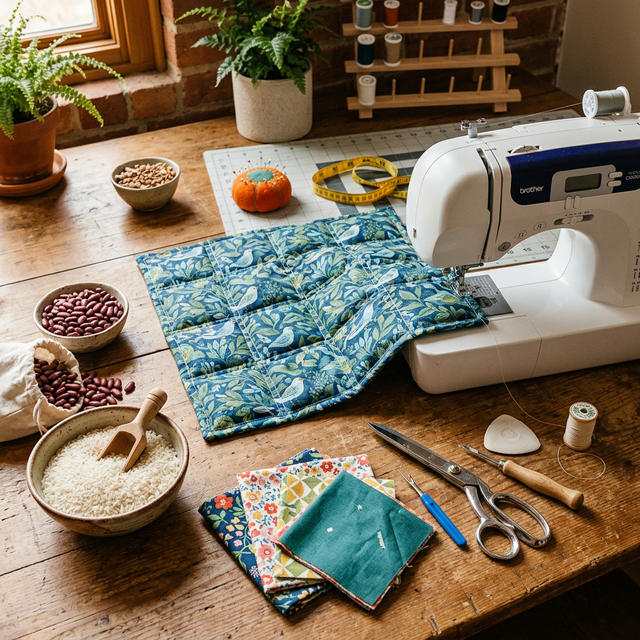
🧺 DIY Weighted Lap Pad
What it is: A repurposed pillowcase or cloth bag filled with dried beans, rice, or sand.
How to make one:
- Fill a standard pillowcase or ziplock freezer bag with uncooked rice, dried lentils, or dried beans
- Target weight: 5% of your body weight (e.g., for a 60-lb child, aim for 3 lbs)
- Weigh it on a kitchen scale
- Sew or tie the open end closed
- Optionally, put it inside a second pillowcase for durability
Cost: Essentially $0 using items already in your kitchen.
Works for: Desk tasks, homework, car rides, classroom use (check with teacher first)
⚠️ Safety warning: Rice, dried lentils, and beans are significant choking hazards for young children. Do not use this DIY tool in any space accessible to toddlers or infants, and never leave it within reach of children under 4. Supervise use closely. If your household includes young children or pets, consider a commercially manufactured lap pad with properly sealed bead compartments instead.
🛌 Layer Regular Bedding for Weighted Blanket Effect
What it is: Stack multiple regular blankets to create a DIY weighted sleep surface.
How to do it:
- Use a heavy comforter as the base
- Add 2-3 regular blankets on top
- Position them specifically over the torso and legs where weighted blankets have the most effect
- Target a combined weight that feels snug but not restrictive
Works for: Adults and older teens testing whether a weighted blanket would help their sleep before buying one
Important safety note: Do NOT use stacked heavy blankets on children under 13 or individuals with limited mobility. The weight can be difficult to manage independently.
💆 Firm Self-Massage
What it is: Using your own hands or a firm brush to apply sustained pressure to muscles.
Effective techniques:
- Forearm squeeze: Use one hand to firmly squeeze and release the forearm from wrist to elbow (hold each squeeze 3-5 seconds)
- Shoulder press: Apply steady downward pressure on your own shoulders
- Scalp pressure: Apply firm, stationary pressure to different parts of the scalp with fingertips
- Foot massage: Apply firm pressure across the sole of the foot
With a massager:
- A lacrosse ball or tennis ball rolled firmly against a wall (back, shoulders, hips) targets deep muscle layers effectively
- Firm bristle brushes used in the Wilbarger Protocol provide organized tactile deep pressure
Works for: Adults and teens who don’t have access to sensory tools at work or school
👕 Tight Athletic Clothing
What it is: Wearing compression or tight-fitting athletic clothing under regular clothes to mimic compression vest effects.
Works for:
- Adults seeking all-day sensory support at work
- Teens who want a discreet sensory tool at school
- People who want to test whether compression clothing helps before buying a dedicated vest
What to buy:
- Athletic compression shirts (Under Armour, Nike Pro, etc.), around $25-40
- Compression leggings, readily available at any sporting goods store
- Compression socks, inexpensive and usable in any setting
Effectiveness note: While athletic compression isn’t calibrated for therapeutic pressure like dedicated sensory garments, many occupational therapists recommend this as a practical starting point.
Building a Free Sensory Diet
Combine these techniques into a simple daily schedule:
| Time of Day | Free Technique | Duration |
|---|---|---|
| Morning | Wall push-ups + carrying heavy backpack | 5-10 min |
| Before school/work | Bear hug or firm shoulder squeeze | 30-60 sec |
| During desk work | DIY rice lap pad | 15-20 min |
| Sensory break | Heavy work (pushing laundry, wall push-ups) | 5 min |
| After school | Couch cushion sandwich or blanket burrito | 10-15 min |
| Bedtime | Multiple stacked blankets (adults) or blanket burrito (kids) | Throughout night |
When to Invest in the Real Thing
Free techniques work remarkably well, but manufactured sensory tools have real advantages:
| Comparison | DIY | Manufactured |
|---|---|---|
| Consistent weight | ❌ Variable | ✅ Precisely calibrated |
| Durability | ❌ Beans shift, pillowcases wear | ✅ Built for daily use |
| School-appropriate | ⚠️ May not meet school standards | ✅ Usually accepted |
| Machine washable | ⚠️ Difficult | ✅ Most have removable covers |
| Cost | ✅ Free to $5 | ❌ $30-$250 |
The sweet spot: Use free techniques first. If they clearly help, that’s your evidence that investing in a proper weighted blanket or compression vest is worthwhile.
Frequently Asked Questions
Q: Are DIY weighted items safe for children?
A: The techniques in this guide are safe with adult supervision. Never leave children unsupervised in a blanket burrito, cushion sandwich, or under stacked heavy blankets. The child must always be able to exit independently.
Q: How do I know if my child needs a weighted blanket or if free techniques will work?
A: Start with 2-4 weeks of consistent free DPS techniques. If you see clear improvements in focus, sleep, or emotional regulation, that’s confirmation that deep pressure helps, and a signal to consider investing in purpose-made sensory tools.
Q: My school won’t allow homemade sensory items. What can I do?
A: A store-bought weighted lap pad is usually more accepted because it looks professional. Many teachers also permit heavy work activities and movement breaks without requiring any tools at all, ask your school OT about a sensory break protocol.
Written by The DPS Editorial Team. All techniques are intended for informational purposes. Consult an occupational therapist for individualized guidance.
Continue reading:
The DPS Editorial Team
Editorial Team
The DeepPressureStimulation.com Editorial Team researches and writes about deep pressure stimulation, weighted blankets, and sensory tools. We are not licensed occupational therapists or medical professionals. All content is based on peer-reviewed research, published clinical guidelines, and reputable health sources. Always consult a qualified healthcare provider before starting any new therapy.
Stay Informed, Stay Calm
Get science-backed articles on deep pressure therapy, weighted blankets, and sensory tools delivered to your inbox. No spam — just calm.
📬 No spam, ever. Unsubscribe anytime.